
Loading...

Half of Americans can identify AI-written text, yet they trust it nearly as much as human-created content. This paradox reveals a crucial insight for marketers in 2026: authenticity in AI-generated content isn't about hiding technology, it's about delivering genuine value. This guide shows you how to blend AI efficiency with authentic voice to drive engagement, improve SEO, and build lasting trust with your audience.
| Point | Details |
|---|---|
| Marketer adoption | 81% of content marketers view AI positively as a scaling tool in 2026. |
| Consumer priorities | Audiences detect AI writing but value authenticity and usefulness over authorship method. |
| Authenticity drives results | Human-like content boosts engagement metrics, trust signals, and search visibility. |
| Detection evolution | AI detection tools reach 96.1% accuracy but focus on patterns, not intent. |
| Brand voice matters | Distinct personality and varied language separate memorable content from generic AI output. |
Marketers have embraced AI as a content creation powerhouse. 81% of content marketers feel positive about using AI-generated content in 2026, recognizing its potential to scale output while maintaining quality standards. 67% view large language models as opportunities rather than threats, signaling a fundamental shift in how professionals approach content production.
Yet consumers tell a different story. While many accept AI's role in content, 59% worry about losing the human touch in brand communications. This concern stems from experiences with generic, lifeless content that fails to connect emotionally or provide personalized value.
The gap between marketer enthusiasm and consumer caution creates both challenge and opportunity. Brands that master the balance can deliver content at scale without sacrificing the authentic voice that builds relationships. The AI impact on content marketing extends beyond efficiency to reshape how audiences perceive brand trustworthiness.
Trust hinges on execution, not just technology choice. When AI tools amplify human expertise and brand personality, consumers respond positively. When they replace genuine insight with formulaic responses, engagement suffers. Understanding common AI writing risks helps you avoid pitfalls that erode credibility.
The market dynamics reveal a clear path forward. Marketers must treat AI as an enhancement to human creativity, not a replacement. Success requires intentional strategies that preserve authentic voice while leveraging computational power for research, structuring, and scaling.
Pro Tip: Review your AI-generated drafts specifically for emotional resonance and brand personality before publishing. If the content could apply to any competitor, you've lost authenticity.
Detection technology has advanced dramatically. Models like RoBERTa achieve 96.1% accuracy distinguishing human from AI text by analyzing linguistic patterns, vocabulary choices, and structural consistency. These tools identify statistical fingerprints that betray machine generation.
Yet detection remains probabilistic, not definitive. Factors like formulaic transitions, uniform sentence length, and predictable word choices trigger detection algorithms. False positives occur when human writers adopt overly structured approaches, while sophisticated AI prompting can reduce detection rates.
| Detection factor | AI tendency | Human variation |
|---|---|---|
| Sentence rhythm | Consistent medium length | Mixed short and long |
| Transitions | Formulaic connectors | Contextual bridges |
| Vocabulary | Safe, common choices | Personal, unexpected terms |
| Structure | Predictable patterns | Organic development |
Authenticity transcends detection metrics. You can bypass every detector and still produce soulless content that fails to engage readers. True authenticity requires aligning your content with brand values, incorporating genuine expertise, and delivering unexpected insights that only human experience provides.
The intersection of detection and authenticity matters because both influence trust. Content flagged as AI may face skepticism regardless of quality, while undetected but generic AI content fails to build meaningful connections. Your goal should be creating valuable, distinctive content that serves readers first.

Understanding risks undetectable AI content poses helps you focus on substance over gaming detection systems. When your content delivers real value with authentic voice, detection becomes secondary to audience response.
Pro Tip: Vary your sentence structure deliberately. Follow a complex sentence with a punchy one. This creates natural rhythm that both improves readability and reduces AI detection signatures.
Developing a distinct voice profile transforms AI from generic content mill to brand amplifier. Voice profiles capture personality dimensions beyond basic style guides, defining your tone, vocabulary preferences, humor style, and values expression. AI content sounds generic when prompts lack specific brand voice parameters.
Your voice profile should address:
Incorporate personal experiences and specific examples that AI cannot fabricate. Share customer stories, team insights, or industry observations that root your content in reality. This grounding creates authenticity no prompt engineering alone can achieve.
Voice profiles capture personality that makes content recognizably yours. Update them quarterly as your brand evolves and train your AI prompts to reference these profiles consistently. Include example passages that exemplify your ideal tone.
| Generic AI content | Humanized AI content |
|---|---|
| Uniform sentence length | Varied rhythm and pace |
| Formal, distant tone | Conversational warmth |
| Predictable structure | Surprising insights |
| Safe vocabulary | Distinctive word choices |
| Fact presentation | Story integration |
Blend AI efficiency with editorial judgment. Use AI for research, outline development, and first drafts, then inject personality through revision. Add unexpected comparisons, challenge conventional thinking, or share contrarian perspectives that reflect your actual expertise.
Learn how to humanize AI text through specific techniques like varying sentence openings, incorporating sensory details, and replacing abstract concepts with concrete examples. These tactics create the texture readers associate with human authorship.
Master sounding less robotic techniques by eliminating overused transitions like "moreover" and "furthermore." Replace them with contextual bridges that flow naturally from one idea to the next.
Pro Tip: Create a swipe file of your best human-written content. Analyze what makes it authentic, then build prompts that guide AI toward those characteristics while maintaining your unique voice.
Google's quality guidelines prioritize user value over authorship method. The search giant does not penalize AI-generated content per se, but ruthlessly demotes low-quality material regardless of origin. Originality, expertise, and evident human effort matter more than how you produced the text.
Human-sounding content improves trust and interaction signals that influence rankings. When readers engage longer, share more, and return frequently, search algorithms interpret this as quality confirmation. Authentic voice drives these behaviors naturally.
SEO and engagement best practices for AI-enhanced content include:
Compliance with detection standards matters primarily in academic and professional contexts where AI usage policies apply. For marketing content, focus on authenticity metrics that predict performance: time on page, scroll depth, social shares, and conversion rates.
Understand content authenticity and SEO connections to align your AI strategy with search visibility goals. Authentic content naturally earns backlinks, generates discussion, and attracts returning visitors.
Track content metrics to boost SEO specific to AI-enhanced workflows. Monitor how different prompting approaches affect engagement rates, then refine your process based on performance data rather than assumptions about what sounds human.

Balancing efficiency with quality requires clear benchmarks. Establish minimum standards for originality, depth, and voice consistency before publishing AI-assisted content. Use human review as the final quality gate, ensuring technology serves your brand rather than defining it.
You've learned why authenticity matters and how to achieve it. Now scale these principles across your entire content operation.
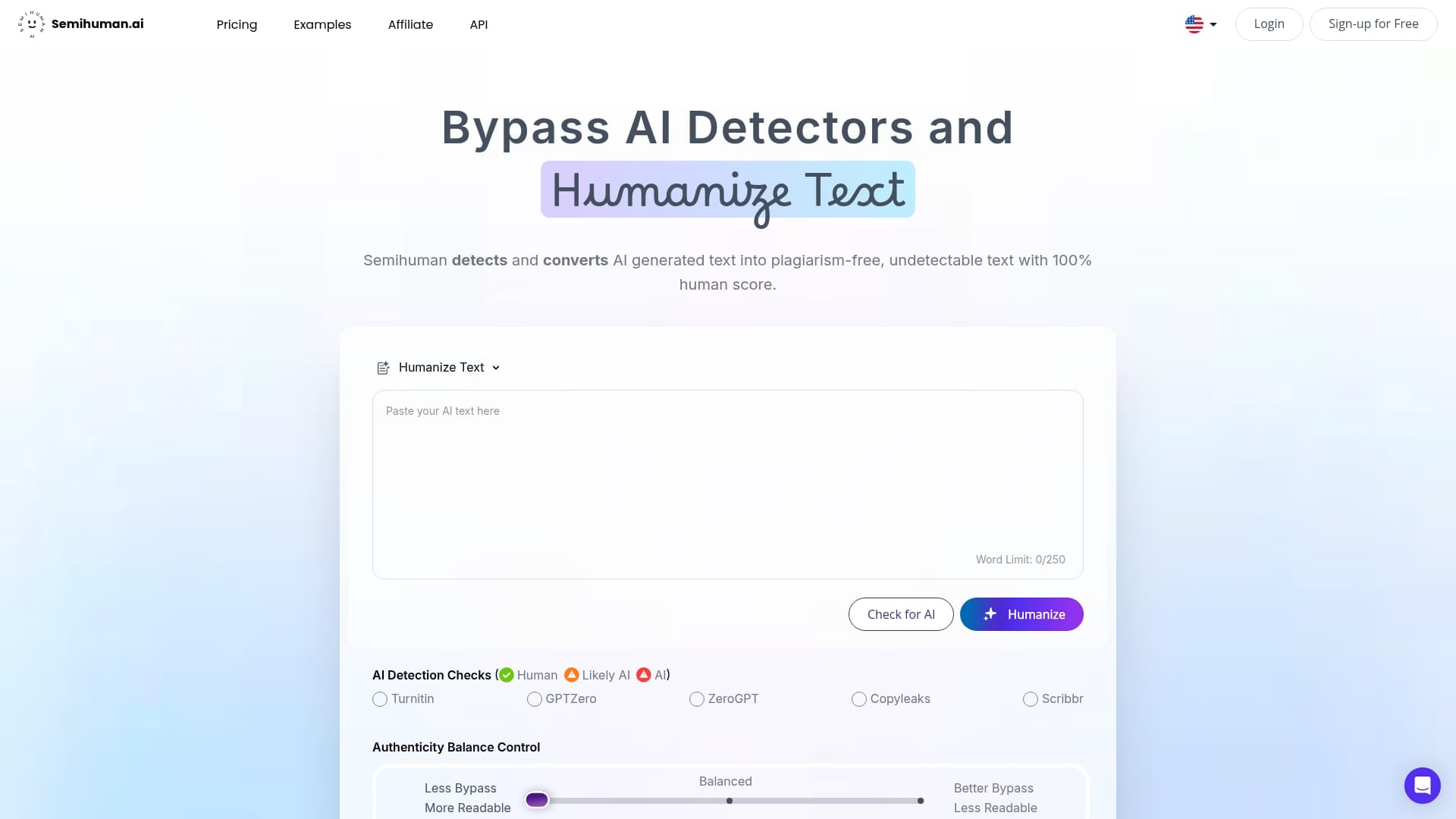
Semihuman AI combines advanced SEO text generation with sophisticated humanization that preserves your brand voice while optimizing for search visibility. Our platform helps content creators produce authentic material at volume without sacrificing the personal touch that builds audience relationships.
Our AI detector bypass tools restructure content to feel genuinely human while maintaining readability and engagement. Perfect for marketers who need to scale production without losing the distinctive voice that differentiates their brand in crowded markets.
Visit Semihuman AI to explore how our platform balances technological efficiency with authentic communication. Transform your content workflow while keeping the human element that drives real results.
Balancing tech and authenticity means using AI's efficiency for research, structure, and scaling while ensuring your content reflects genuine brand personality and delivers unique value. You leverage computational power without sacrificing the human insight, emotional resonance, and distinctive voice that build audience trust and drive engagement.
AI detection identifies statistical patterns suggesting machine generation, focusing on technical fingerprints like sentence rhythm and vocabulary consistency. Content authenticity measures whether your material feels genuine, delivers original insights, and connects emotionally with readers. You can pass detection tests while producing generic content, or fail them while creating genuinely valuable material.
Effective humanization involves varying sentence length and structure, incorporating personal anecdotes and specific examples, using conversational language with your audience's vocabulary, challenging conventional thinking with fresh perspectives, and injecting brand personality through distinctive word choices. Learn practical approaches at how to humanize AI text for immediate implementation.
Authentic content earns longer engagement, more shares, and stronger trust signals that search algorithms interpret as quality markers. Readers connect emotionally with genuine voice, leading to repeat visits and natural backlinks. Google prioritizes content demonstrating expertise and user value, both enhanced by authentic communication that resonates with your target audience.
AI-assisted content can match or exceed human performance when you use technology to enhance rather than replace human expertise. Success requires strong voice profiles, editorial oversight, original insights from actual experience, and strategic revision that adds personality AI cannot generate independently. The key is treating AI as a powerful tool within a human-led creative process.

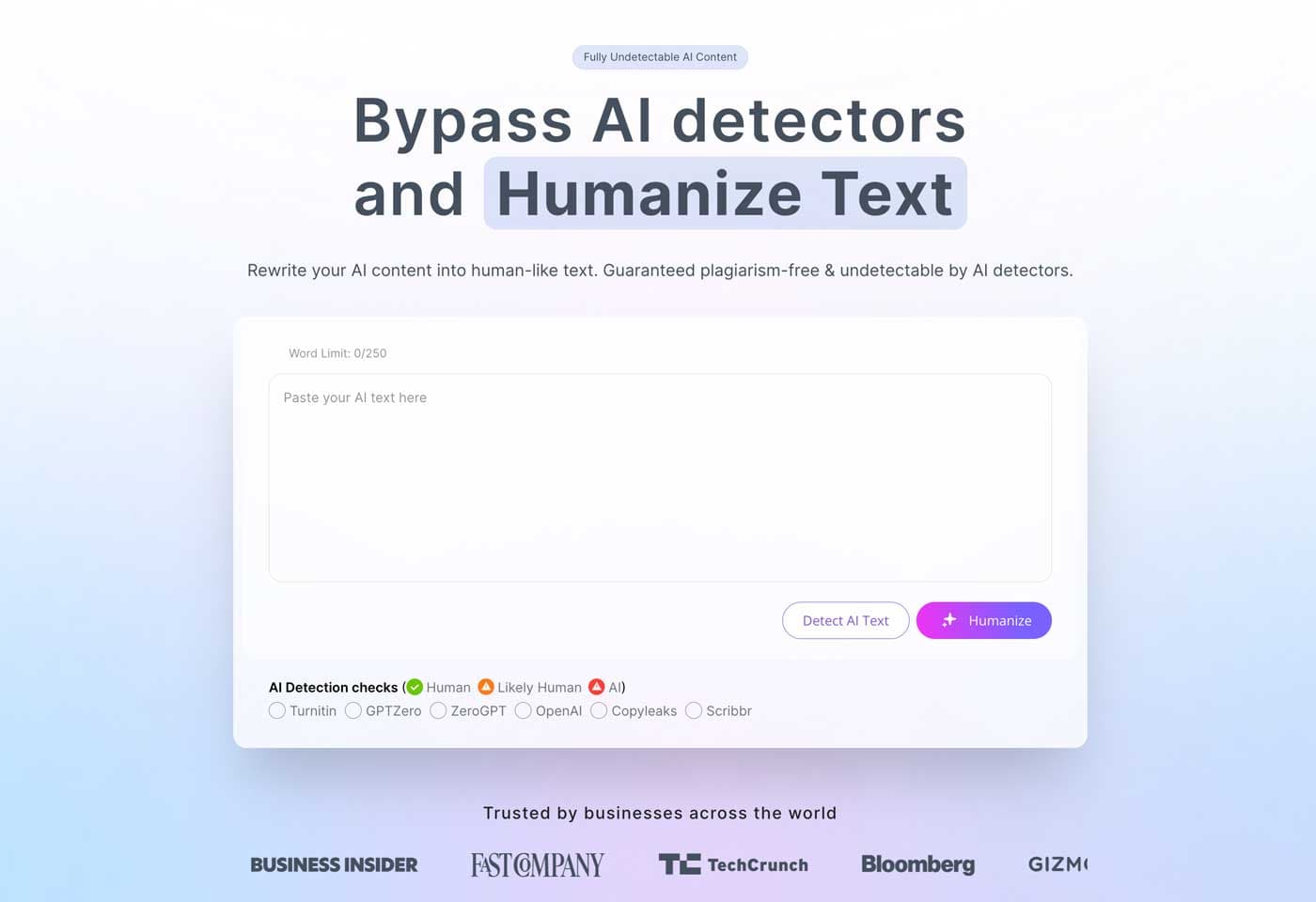

Start
Humanizing
for Free!
Humanize