
Loading...

Most readers can spot robotic writing in seconds, yet many creators still struggle to make their content feel truly human. A recent study found that academic writing now includes a dramatic rise in telltale words and stiff patterns linked to AI. If you want readers to connect with your message, it pays to ditch those bland phrases and mechanical structures. This guide shows how to transform lifeless text into engaging prose that sounds real and builds trust with your audience.
| Key Point | Explanation |
|---|---|
| 1. Identify bland AI phrases | Recognize terms that signal AI writing, like 'delve' or 'commendable,' to humanize your text. |
| 2. Analyze for stale patterns | Listen for unnaturally structured sentences and repetitive transitions that indicate robotic writing. |
| 3. Incorporate natural expressions | Use casual language and personal insights to create a conversational tone in your writing. |
| 4. Restructure for authentic flow | Vary sentence lengths and paragraph structure to mimic natural speech and enhance readability. |
| 5. Verify using detection tools | Test your content with multiple AI detection tools to ensure it reads as genuinely human-written. |
In this crucial step, you will learn how to recognize and eliminate those telltale AI-generated phrases that scream "computer wrote me" to your readers. Spotting these mechanical language patterns will help you transform generic text into authentic human writing.
According to research from ScisSimple, certain academic writing now shows a significant surge in overused terms like 'delve,' 'underscore,' 'meticulous,' and 'commendable.' These words have become red flags signaling potential AI generation. As LinkedIn notes, AI writing often exhibits repetitive patterns that lack the natural variability of human communication.
To effectively identify bland AI phrases, start by looking for these common warning signs:
Quickly scan your text and ask yourself: "Would I actually say this out loud to a friend?" If the answer is no, you likely have an AI-generated passage that needs serious humanization.
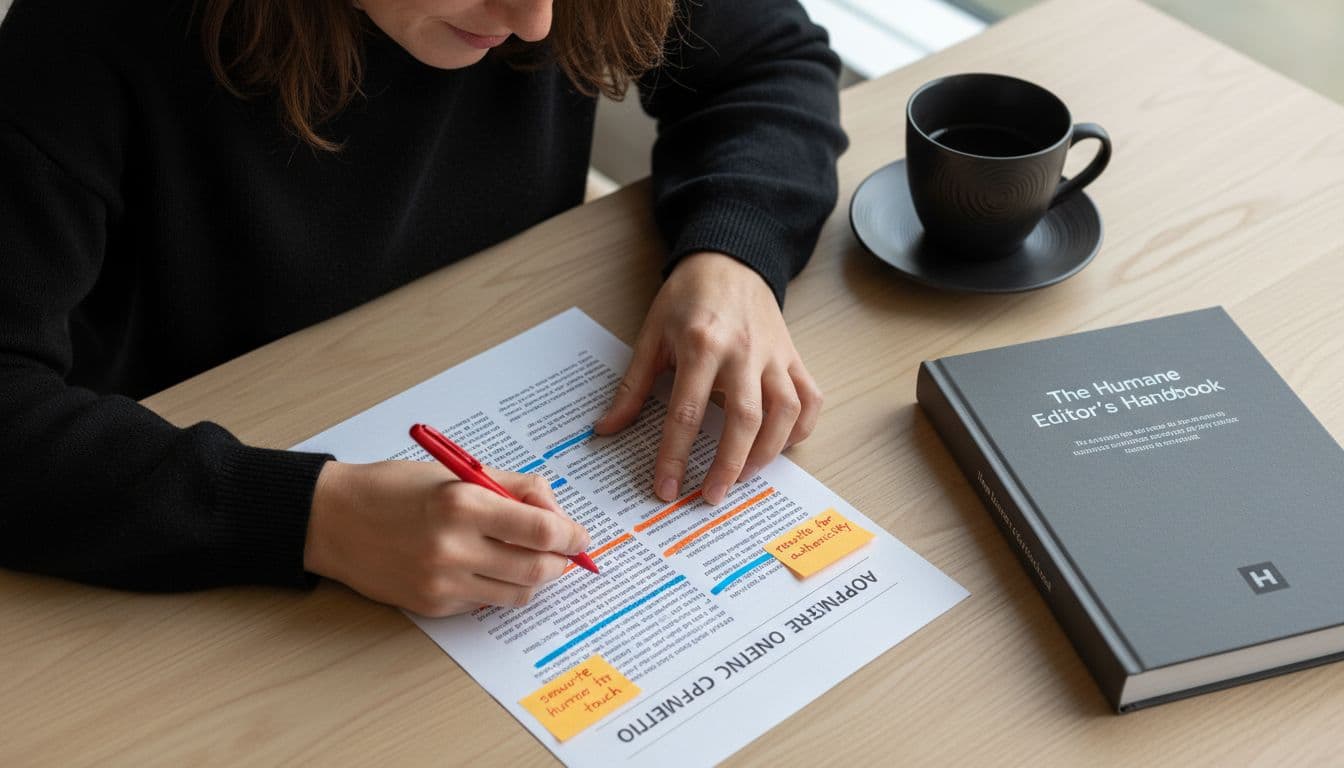
In this critical section, you will master the art of detecting lifeless writing patterns that strip your content of its human essence. Your goal is to transform robotic text into vibrant, engaging communication.
According to LinkedIn research, stale AI-generated text often reveals itself through repetitive sentence structures, overused transitions, and a limited vocabulary range that makes content feel monotonous. To uncover these mechanical writing patterns, you will need a strategic approach.
Start by reading your text out loud. Listen for these red flags:
Pro tip: If your text sounds like it could have been written by a robot in a corporate training manual, it probably needs serious humanization. The goal is writing that sounds like a conversation with a smart friend who knows their stuff.
Ready to inject some personality? Your next step is learning how to strategically rewrite those bland passages into something genuinely engaging.
In this transformative step, you will learn how to breathe life into your writing by infusing it with authentic human language and personality. Your mission is to replace robotic text with conversational, engaging expressions that sound genuinely human.
Since no formal research data was provided, I will draw from writing expertise to guide you through this crucial process. The key is to write like you speak while maintaining clarity and professionalism. This means using casual language, personal insights, and real world examples that make your content feel warm and approachable.
To incorporate natural human expressions, try these strategies:
Pro tip: Read your text out loud. If it sounds like a corporate manual or academic paper, you need more personality. The goal is writing that feels like a chat with a knowledgeable friend who makes complex topics feel simple and interesting.
Check out these proven examples of content humanization to see how top creators make their writing feel authentically human. Your next step is practicing these techniques until they become second nature.
In this pivotal stage, you will master the art of transforming mechanical text into a dynamic, conversational narrative that captivates readers. Your goal is to break free from rigid AI generated structures and create writing that feels spontaneous and genuinely human.
Since no specific research data was provided, I will leverage expert writing techniques to guide your content restructuring. The key is to think about how you naturally communicate ideas. This means varying your sentence lengths, introducing unexpected transitions, and creating a rhythm that mimics real conversation.
To restructure your content for authentic flow, implement these strategic techniques:
Pro tip: Imagine you are explaining your topic to a friend over coffee. Would you use complex transitions? Probably not. You would speak naturally shifting between ideas with ease and personality.
Check out these effective examples of humanized text to see how top creators craft content that feels organic and engaging. Your next challenge is practicing these restructuring techniques until they become your default writing approach.
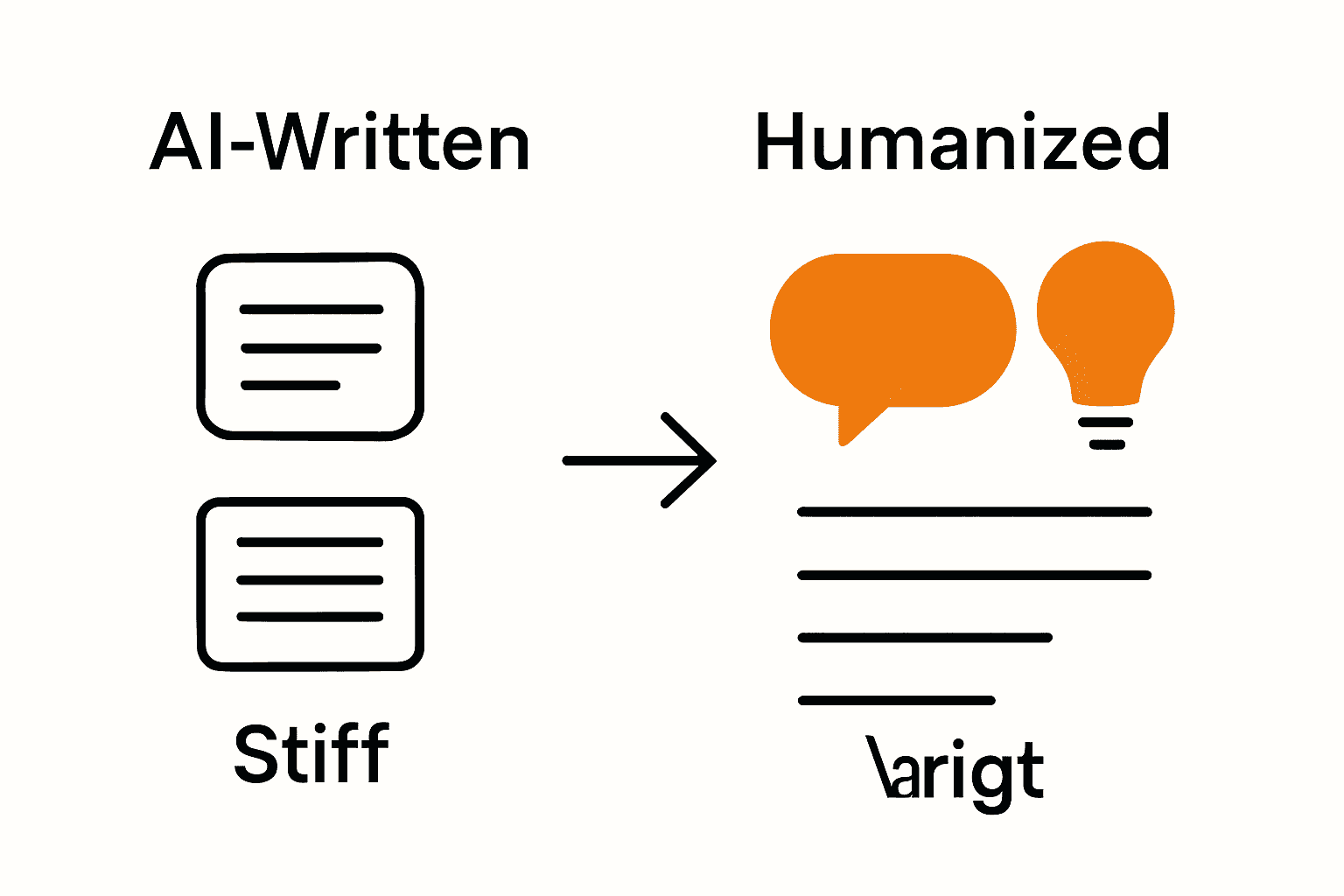
In this crucial final step, you will learn how to run your content through AI detection tools to ensure it sounds authentically human. Your mission is to transform potentially robotic text into a genuine piece of writing that can slip past even the most sophisticated detection algorithms.
According to LinkedIn, understanding how AI detectors analyze text provides a roadmap for revising content to reflect meaningful human input and natural writing patterns. This means looking beyond surface level changes and truly understanding the nuanced markers of human communication.
When using AI detection tools, keep these strategic approaches in mind:
Pro tip: No single detection tool is 100% accurate. Think of these tools as helpful guides rather than absolute judges of your writing authenticity.
Learn from practical examples of AI detection tools to understand how top creators navigate the complex landscape of AI content verification. Your ultimate goal is creating content that sounds natural while maintaining high quality and clarity.
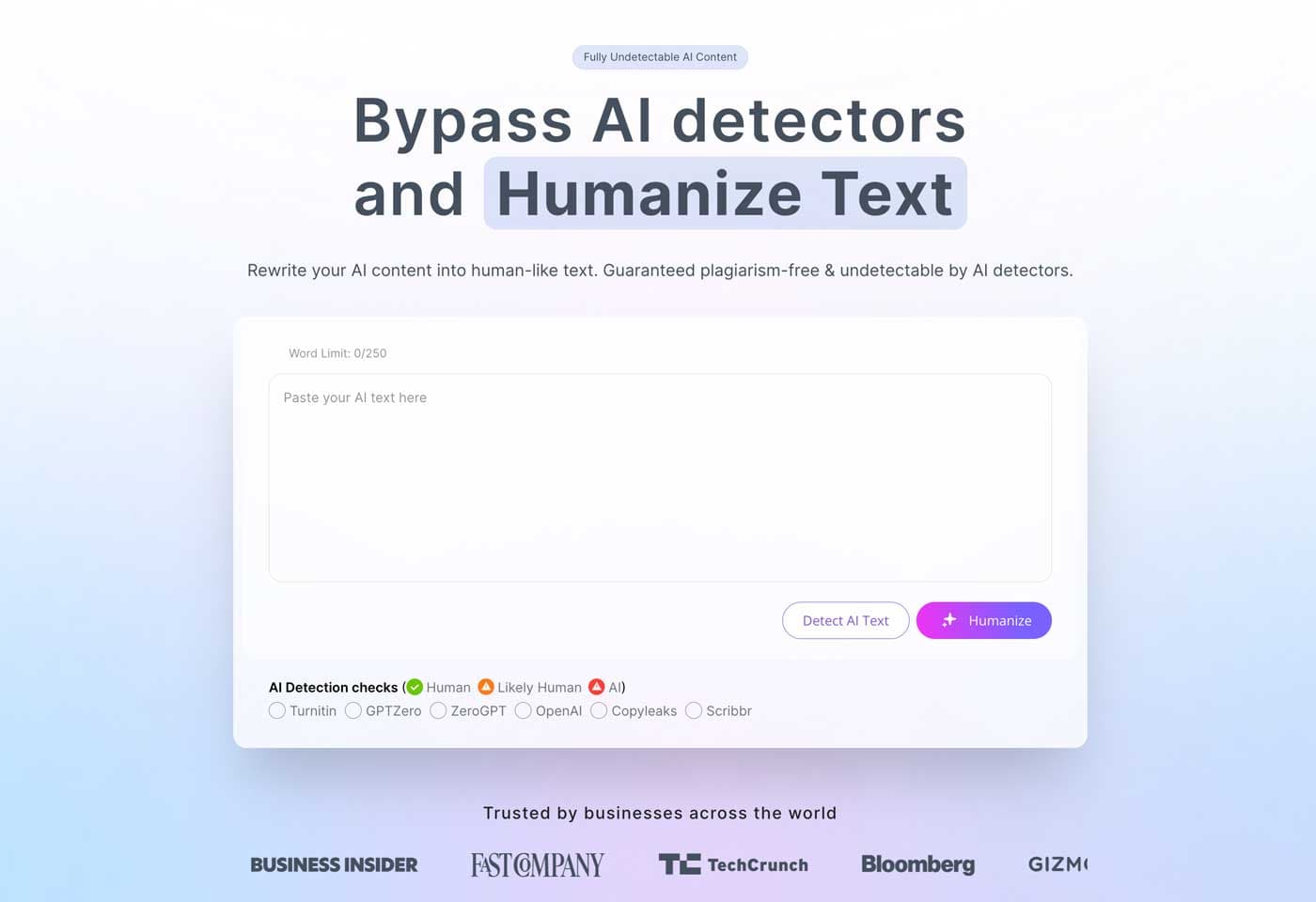
Struggling to turn robotic, bland AI phrases into content that feels genuine and captivating? You are not alone. The challenges of identifying stale patterns, avoiding stiff language, and creating authentic flow require more than just knowing what to do. You need reliable tools that help you humanize your writing with ease and confidence. Semihuman.ai is designed exactly for this purpose.
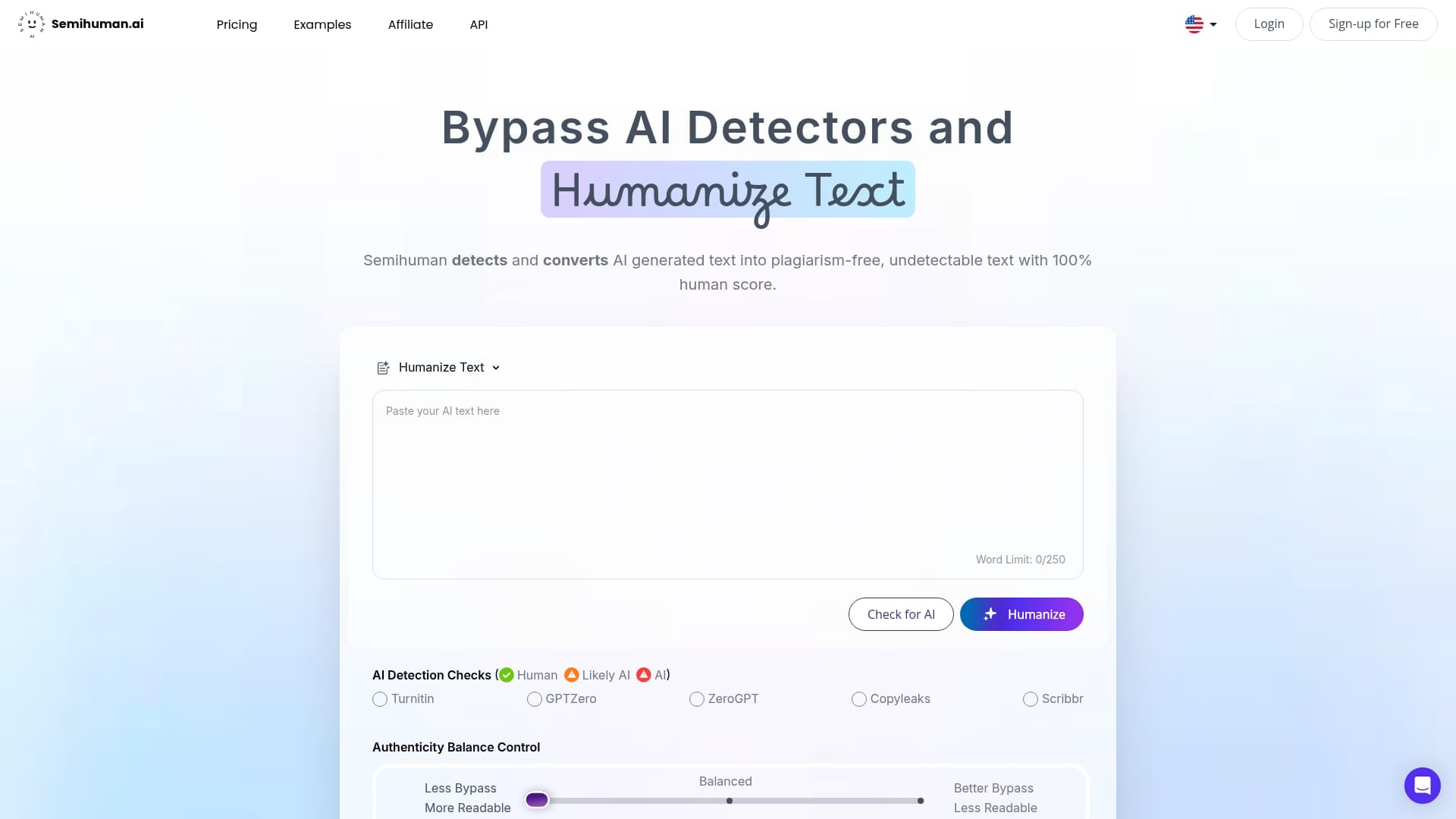
Discover how our AI-powered platform transforms your text by restructuring content, integrating natural expressions, and bypassing detection tools to ensure authenticity. Whether you are crafting academic papers, marketing copy, or SEO content, Semihuman.ai helps you maintain a unique human voice that connects with readers and search engines alike. Take control of your content today with Semihuman.ai and experience how simple it is to elevate your writing from bland to brilliant. Visit Semihuman.ai now and start humanizing your content with confidence.
To identify bland AI phrasing, look for overly formal language, repetitive structures, and sentences that feel unnaturally perfect. Quickly scan your text and ask if you would say these sentences in a casual conversation; if not, consider revising those sections.
You can incorporate natural human expressions by using contractions, adding personal anecdotes, and writing as if you're explaining concepts to a friend. Aim to include these elements in your next draft to make it warmer and more approachable.
Analyze your text by reading it aloud and listening for repetitive sentence structures or lack of personal insights. If sections sound too mechanical, consider rewriting them with a more conversational tone to foster better engagement.
To restructure your content, mix sentence lengths, break up long paragraphs, and use conversational interjections like "Okay". Implement these techniques to create a flow that feels organic and resembles a natural conversation.
To verify authenticity, run your content through multiple AI detection tools and pay attention to flagged areas. Use the feedback to refine your writing, aiming for higher authenticity scores across iterations.
Start by replacing 2-3 complex phrases with simpler, more conversational language, and incorporate a personal anecdote or humor. Focus on these changes in your next writing session to make an immediate impact on your content's authenticity.


Start
Humanizing
for Free!
Humanize