
Loading...

More than one-third of American students have already turned to AI tools for academic assignments, sparking urgent debate among marketers and content creators worldwide. When AI blurs the lines of authorship and originality, the risk of unintentional plagiarism rises sharply. This guide unpacks the essentials every agency, freelancer, and digital professional needs to recognize AI-driven plagiarism and protect their reputation in an era where authentic, human-like content is non-negotiable.
| Point | Details |
|---|---|
| AI-Driven Plagiarism | AI-driven plagiarism involves sophisticated content creation techniques that blur the lines of academic integrity. It is crucial to understand the distinction between legitimate AI assistance and unethical content reproduction. |
| Detection Challenges | Advanced detection tools are necessary to identify AI-generated content, focusing on linguistic patterns and contextual analysis. Continuous adaptation to AI advancements is vital for detection accuracy. |
| Ethical Considerations | Creators must navigate complex ethical and legal landscapes regarding authorship and AI tool usage. Transparent documentation and adherence to institutional policies are essential for maintaining integrity. |
| Practical Solutions | Implementing robust AI detection systems, clear policies, and educational training can safeguard content integrity while balancing technological innovation with ethical standards. |
Artificial intelligence has dramatically transformed content creation, introducing complex ethical challenges around originality and authorship. Emerging research demonstrates that generative AI tools like large language models are blurring traditional boundaries of academic and professional writing integrity.
AI-driven plagiarism represents a nuanced form of intellectual appropriation where machine-generated text mimics human writing with unprecedented sophistication. Unlike traditional plagiarism involving direct human copying, AI systems synthesize content by analyzing massive datasets, creating text that appears original but fundamentally relies on existing sources. Academic surveys reveal that approximately one-third of students have already utilized AI tools like ChatGPT for academic assignments, signaling a profound shift in content creation practices.
The core challenge lies in distinguishing between legitimate AI assistance and unethical content reproduction. Authentic content requires human oversight, critical thinking, and transparent attribution of AI involvement. Key distinguishing factors include:
AI plagiarism detection now requires advanced technological strategies that can differentiate between machine-generated and human-authored text, analyzing linguistic patterns, semantic consistency, and contextual nuances.
Pro Tip: Always review and substantially modify AI-generated content, adding personal insights and verifying factual accuracy before submission.
AI-powered plagiarism has evolved into a complex spectrum of intellectual misappropriation that challenges traditional academic integrity standards. Systematic research reveals multiple sophisticated strategies students and professionals employ to leverage AI tools in unethical content reproduction.
The primary categories of AI-driven plagiarism include full AI-generated submissions, partial AI integration, and strategic content manipulation. Comparative studies across academic disciplines demonstrate that these plagiarism types manifest differently depending on the field of study, with nuanced variations in detection complexity and ethical implications.
Detailed breakdown of AI plagiarism types includes:
These plagiarism strategies exploit the sophisticated language generation capabilities of large language models, creating significant challenges for educational institutions and content verification systems. Academic and professional environments must develop advanced technological and policy-based approaches to address these emerging ethical concerns.
Here's a summary comparing common types of AI-powered plagiarism and their main challenges for detection:
| Plagiarism Type | Primary Detection Challenge | Originality Risk |
|---|---|---|
| Full AI-Generated Text | High linguistic uniformity | Very high risk |
| Paraphrased AI Content | Pattern disruption with rewording | Moderate risk |
| Hybrid Submissions | Mixed authorship signals | High risk |
| Strategic Rewriting | Masked source structure | Moderate to high risk |
Pro Tip: Always maintain a digital trail of your content creation process, documenting each stage of research, drafting, and AI tool usage to ensure transparency and academic integrity.
Artificial intelligence detection technologies represent a sophisticated arms race between content generation and verification systems. Advanced machine learning techniques now enable complex pattern recognition that distinguishes between human and machine-generated text with increasing precision.
AI detection tools leverage multiple analytical strategies to identify synthetic content. Statistical analysis and pattern recognition methods examine linguistic characteristics that typically differentiate AI-generated text from human writing. These sophisticated algorithms analyze several key indicators:
The detection process involves complex machine learning models trained on extensive datasets of both human and AI-generated content. These systems continuously adapt to evolving language generation technologies, creating a dynamic verification landscape that requires constant refinement and technological innovation.
Pro Tip: Regularly update your detection tools and cross-reference multiple verification systems to maximize accuracy in identifying synthetic content.
Content manipulation techniques have emerged as sophisticated strategies for circumventing automated AI detection technologies. Advanced research demonstrates multiple nuanced approaches that exploit current limitations in detection algorithms, creating complex challenges for verification systems.
Emerging academic studies reveal several strategic methods students and professionals use to mask AI-generated content. These techniques typically involve sophisticated text transformation strategies designed to disrupt pattern recognition:
The most effective evasion methods require a deep understanding of both AI generation technologies and detection system limitations. Successful content creators carefully balance machine efficiency with human-like linguistic nuances, creating text that appears naturally generated while maintaining high information quality.
Pro Tip: Always manually review and personalize AI-generated content, focusing on introducing subtle linguistic variations that reflect individual writing style.
Academic integrity faces unprecedented challenges in the generative AI era, with complex ethical dimensions emerging across professional and educational landscapes. Comprehensive research explores the fundamental tension between technological innovation and traditional academic standards.
Systematic reviews reveal significant compliance hurdles that creators and institutions now confront. These challenges manifest through multiple interconnected dimensions:
The evolving landscape demands nuanced approaches that balance technological capabilities with ethical considerations. Creators must navigate complex regulatory environments, understanding that responsible AI usage requires transparent documentation, proper attribution, and maintaining individual intellectual contribution.

Pro Tip: Develop a personal documentation protocol that tracks every stage of content creation, explicitly noting AI tool contributions and personal modifications.
Content authentication demands sophisticated, multifaceted strategies in the generative AI landscape. Advanced research proposes integrating technological tools with educational reforms to combat emerging plagiarism challenges effectively.
Comprehensive studies recommend implementing a holistic approach to content integrity that encompasses multiple strategic dimensions:
Successful content integrity requires collaborative efforts between technologists, educators, and content creators. Organizations must develop flexible frameworks that recognize AI's potential while maintaining rigorous standards of originality and intellectual contribution.
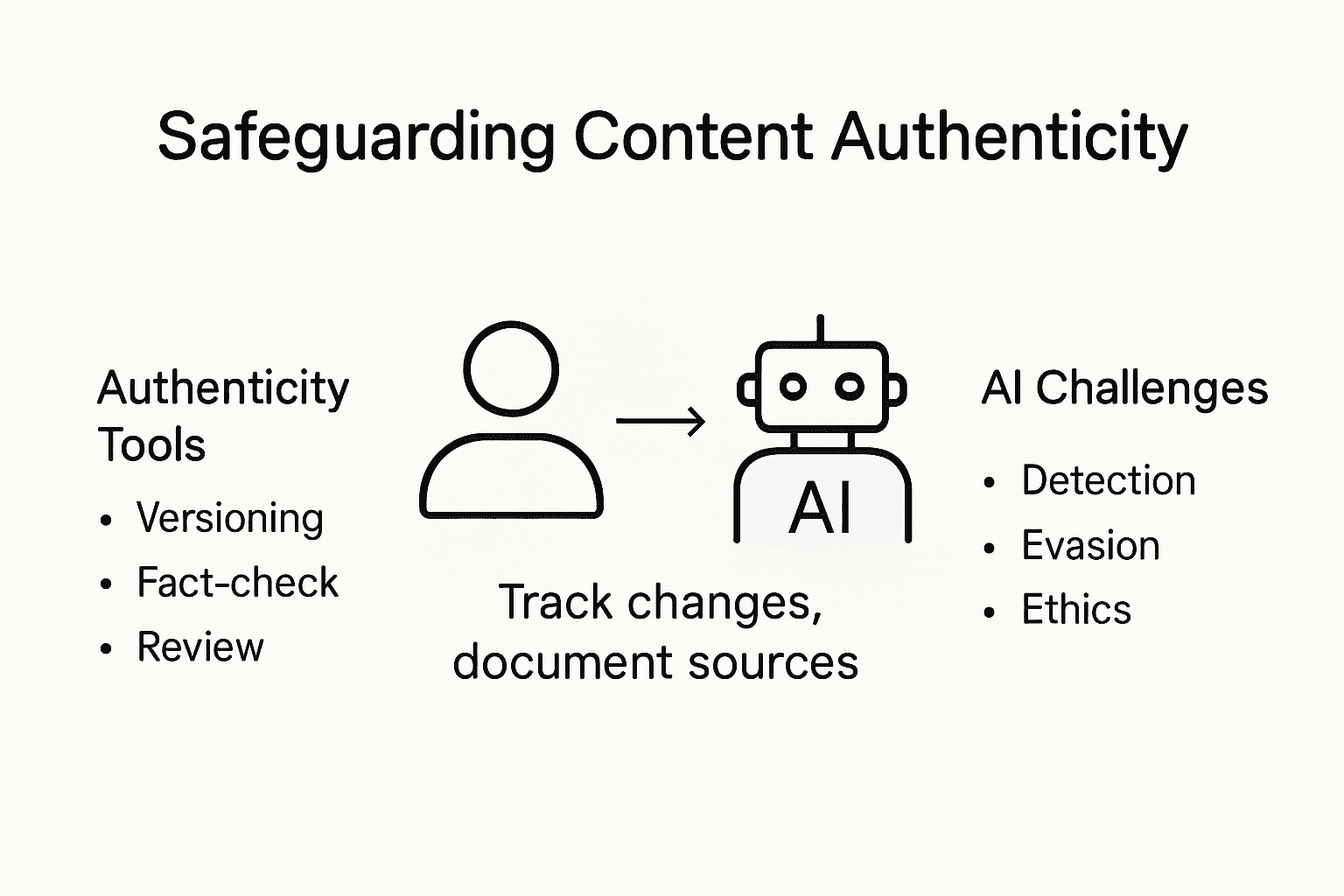
The following table compares strategies to safeguard content integrity in the context of AI-generated text:
| Approach | Core Advantage | Implementation Barrier |
|---|---|---|
| AI Detection Tools | Rapid content analysis | Needs frequent updates |
| Institutional Policies | Clear accountability | Enforcement inconsistency |
| Educational Training | Raises ethical awareness | Requires ongoing curriculum |
| Transparent Documentation | Enables traceable authorship | Time-consuming for creators |
Pro Tip: Create a comprehensive content workflow that includes mandatory AI usage documentation, version tracking, and explicit attribution of machine-generated contributions.
The rise of AI-driven plagiarism and the complex detection methods outlined in the article highlight a growing challenge for students, marketers, and professionals alike. Maintaining originality while integrating AI effectively demands more than basic editing. Key pain points such as avoiding full AI-generated submissions, ensuring transparent AI usage disclosure, and evading sophisticated AI detection algorithms require smarter solutions that keep your content genuinely human and compliant.
Semihuman.ai directly addresses these critical needs by providing a robust platform that not only detects AI-generated text but also expertly transforms it into natural, human-like content. This transformation helps you escape detection by tools such as Turnitin and GPTZero while enhancing SEO performance and preserving your unique voice. By applying advanced text restructuring, keyword integration, and detection evasion strategies, you can confidently submit original work that meets today’s strict ethical and institutional guidelines.
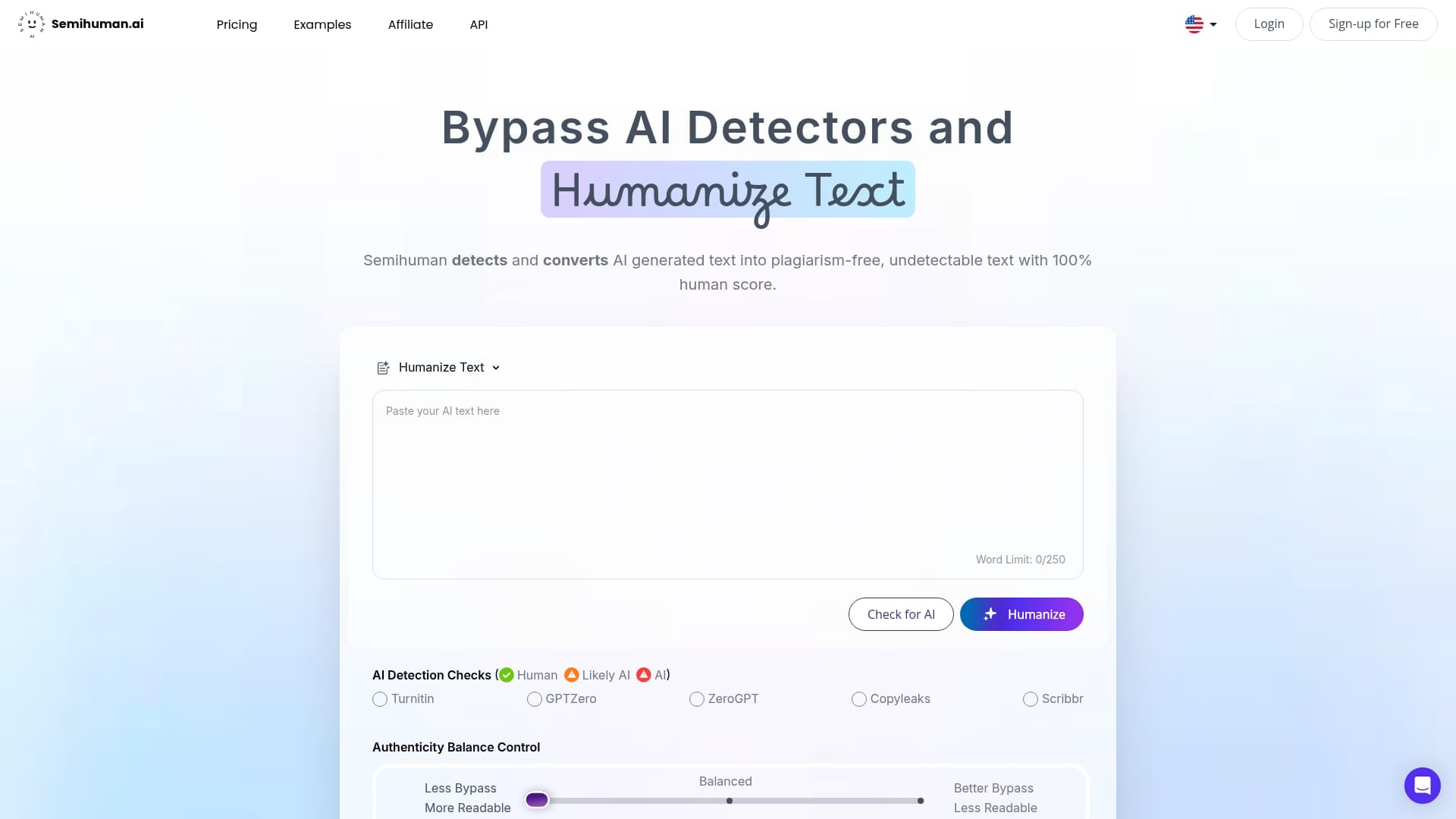
Stop risking academic penalties and lost credibility with AI plagiarism concerns. Take control of your content’s authenticity now. Visit Semihuman.ai to explore our powerful AI-human content solutions. Empower your writing with transparency, originality, and compliance backed by cutting-edge technology.
AI-driven plagiarism refers to a nuanced form of intellectual appropriation where machine-generated text mimics human writing. It differs from traditional plagiarism by synthesizing content from existing sources without specific copying.
To maintain content authenticity, always review and substantially modify AI-generated text. Add personal insights, provide clear disclosure of AI usage, and verify all factual accuracy before submission.
The primary types include full AI-generated submissions, partially integrated AI content, and strategic content manipulation. Each type poses different challenges in terms of detection and ethical implications.
AI detection tools utilize advanced machine learning techniques to analyze linguistic patterns, semantic consistency, and writing style markers. They identify characteristics that typically differentiate AI-generated text from human writing.

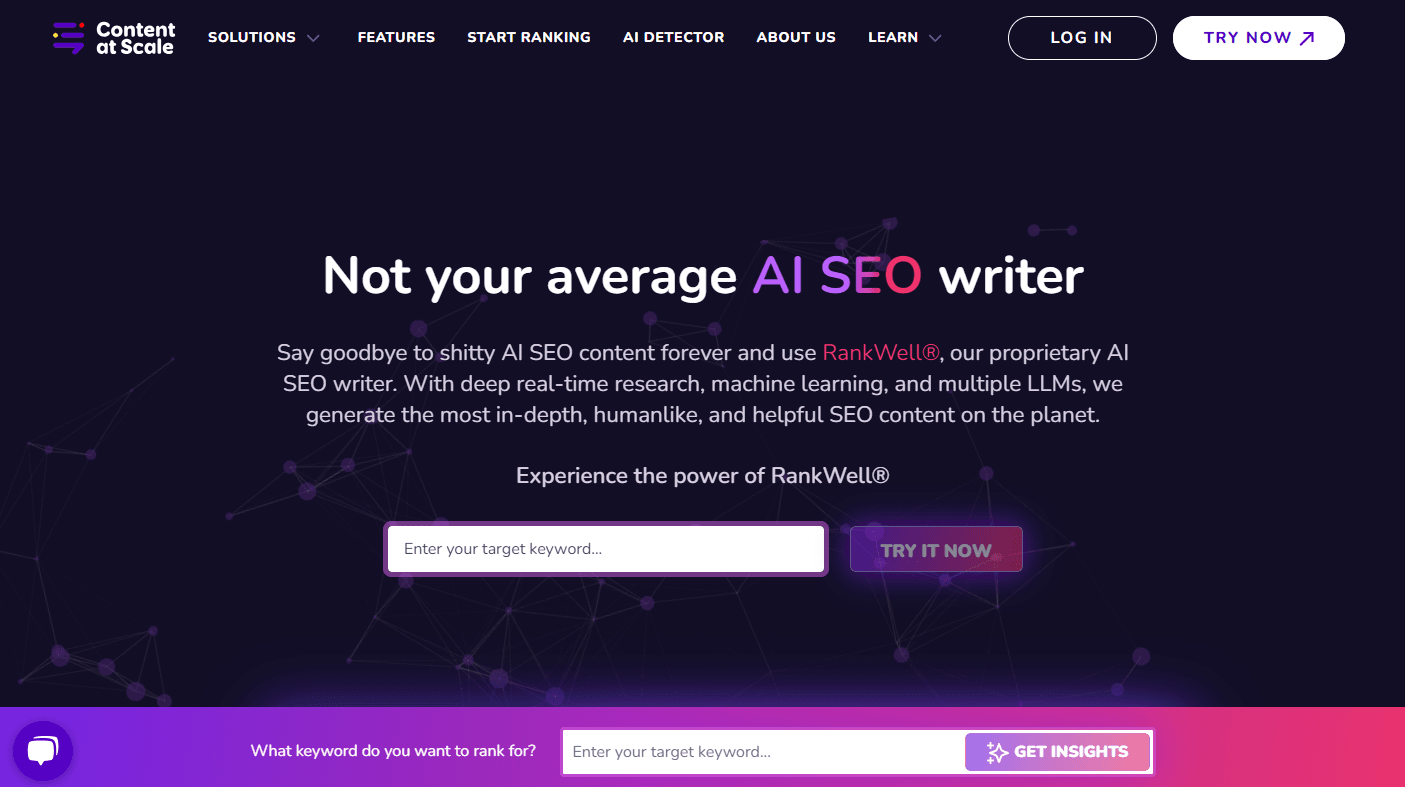
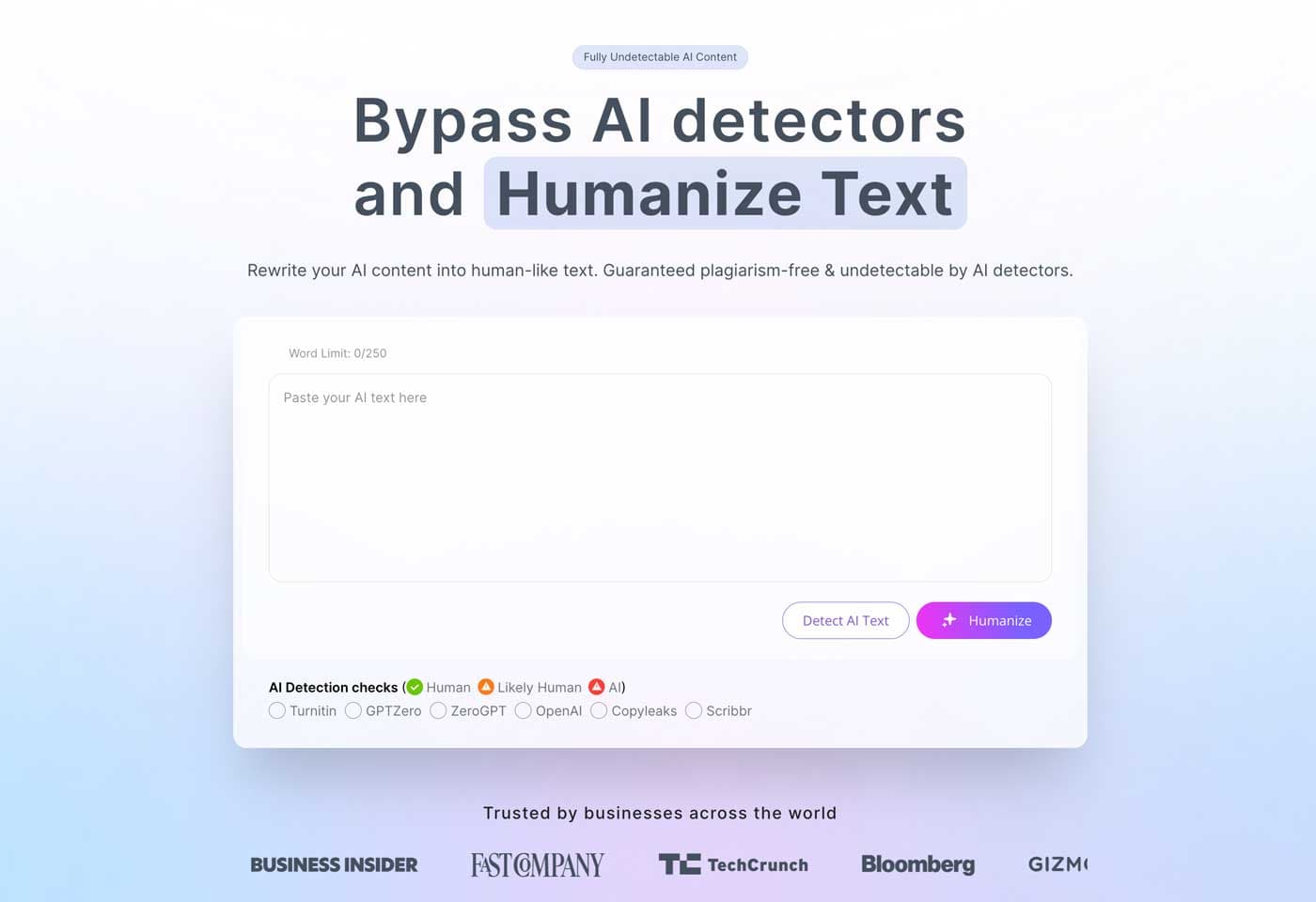
Start
Humanizing
for Free!
Humanize