
Loading...

Digital marketers struggle to make AI-generated content feel genuinely personalized and human. Generic AI output fails to connect with audiences, leaving engagement and conversions flat. This guide delivers proven AI personalization tactics that can boost SEO rankings by up to 35% while dramatically improving engagement and conversion rates through authentic, human-like content that resonates with your target audience.
| Point | Details |
|---|---|
| Essential prerequisites | First-party data with consent, Customer Data Platforms, privacy compliance, and AI humanization tools form the foundation. |
| Implementation steps | Collect data legally, deploy real-time AI personalization, humanize output, integrate keywords naturally, and optimize continuously. |
| Humanization techniques | Manual editing, varied sentence structure, emotional language, and specialized tools reduce AI detection from 85% to under 30%. |
| Common mistakes to avoid | Ignoring privacy laws, over-automation without human touch, outdated data, and keyword stuffing destroy effectiveness. |
| Expected measurable results | Up to 35% SEO ranking boost, 40% engagement lift, 20% conversion increase, and 202% better CTA performance. |
Content personalization tailors messaging to individual user preferences, behaviors, and demographics to create relevant experiences. In digital marketing, personalization transforms generic campaigns into meaningful connections that drive engagement and conversions.
AI revolutionizes personalization by processing vast amounts of demographic, psychographic, and behavioral data in real time. Traditional static targeting delivers the same content to broad segments. AI personalization adapts dynamically to each visitor's current context, browsing patterns, and intent signals.
The 2026 landscape demands sophisticated approaches as third-party cookies disappear. Privacy regulations like CCPA and GDPR require explicit user consent and transparent data handling. Marketers must build first-party data strategies while maintaining compliance.
AI personalization boosts SEO rankings by up to 35% because search engines reward content that satisfies user intent. Personalized content keeps visitors engaged longer, reduces bounce rates, and signals quality to ranking algorithms.
Key differences between AI and traditional personalization include:
AI systems analyze micro-behaviors like scroll depth, hover patterns, and click sequences to predict what content resonates. This granular understanding enables hyper-relevant messaging that traditional methods cannot match.

Successful AI personalization requires solid foundations before implementation. First-party data collected with explicit user consent forms the bedrock. With third-party cookies phasing out, brands must build direct relationships and gather behavioral data through owned channels.
Customer Data Platforms (CDPs) centralize information from websites, email, CRM, and social media into unified profiles. Integrating CDPs with vector databases combines behavioral patterns with semantic understanding of user intent. This pairing enables AI to match content to nuanced preferences.
| Tool Category | Purpose | Key Capabilities |
|---|---|---|
| Customer Data Platform | Unified user profiles | Data integration, segmentation, identity resolution |
| Vector Database | Semantic search | Embedding storage, similarity matching, intent analysis |
| AI Content Generator | Personalized text creation | Dynamic content, template population, tone adjustment |
| Content Humanizer | Authenticity enhancement | Detection reduction, natural phrasing, emotional resonance |
Essential tools for effective AI personalization include:
Privacy knowledge is non-negotiable. CCPA grants California residents data access and deletion rights. GDPR requires lawful bases for processing European user data. Both mandate clear consent mechanisms and transparent privacy policies.
Data integrity determines personalization quality. Incomplete profiles lead to irrelevant recommendations. Outdated information causes misaligned messaging. Clean, current, comprehensive data enables accurate AI predictions.
Pro Tip: Start small with a single customer journey segment to test your data infrastructure and AI tools before scaling personalization across your entire audience.
Integration capabilities matter enormously. Your AI personalization stack must connect seamlessly with existing marketing technology. API compatibility, webhook support, and standard data formats ensure smooth workflows. AI content SEO boost depends on unified systems working in harmony.
Implementing AI personalization requires methodical execution across data collection, content generation, humanization, and optimization. Follow these steps to deploy effective personalized content.
Establish compliant data collection by implementing consent management platforms that capture explicit user permissions. Create transparent privacy policies explaining how you collect and use behavioral data. Build first-party data streams through website interactions, email engagement, and direct user inputs.
Configure real-time behavioral tracking to capture scroll depth, time on page, click patterns, and navigation paths. Feed this data into your CDP to enrich user profiles continuously. Use hyper-personalized real-time behavior data to power AI recommendation engines.
Deploy AI content generation systems that create personalized variations based on user segments and individual behaviors. Train models on your brand voice, product catalog, and customer preferences. Generate dynamic headlines, product descriptions, and call-to-action text tailored to each visitor's context.
Humanize AI text to reduce detection rates from 85% to under 30% using specialized tools. Apply manual editing to add personality and emotional resonance. Vary sentence structure to create natural rhythm. Insert relevant examples and storytelling elements that connect with human experiences.
Integrate strategic keywords naturally throughout personalized content without stuffing. Map keywords to user intent stages. Place primary terms in headlines and opening paragraphs. Distribute semantic variations across body content to maintain readability and SEO value.
Implement A/B testing frameworks to compare personalized content against control versions. Track engagement metrics like time on page, scroll depth, and click-through rates. Monitor conversion rates, form completions, and revenue per visitor to measure business impact.
Set up continuous monitoring dashboards that display personalization KPIs in real time. Watch for performance anomalies that indicate data quality issues or algorithm drift. Adjust AI models based on ongoing results to improve personalization accuracy.
Pro Tip: Balance automation with human oversight by scheduling weekly reviews of AI-generated content to catch tone inconsistencies, factual errors, or messaging that misses the mark emotionally.
Success requires iterative refinement. Your first personalization attempts will reveal gaps in data, content quality, or technical integration. Treat implementation as an ongoing optimization process rather than a one-time project. Learn from performance data and user feedback to enhance your humanize AI content techniques continuously.
The AI SEO personalization tips that deliver results combine technical precision with creative human judgment. AI handles scale and speed. Humans provide strategic direction and quality control. This partnership produces personalized content that ranks well and converts effectively.

Authentic content builds trust and drives engagement far more effectively than robotic AI output. Humanization transforms generic machine-generated text into compelling copy that resonates emotionally with readers.
Key humanization techniques that lower AI detection rates from 85% to under 30% include manual editing for voice consistency, varied sentence structure to create natural rhythm, and emotional language that connects with reader experiences. Add personal pronouns, conversational phrases, and relatable examples to make content feel genuinely human.
Natural phrasing avoids the stilted patterns common in AI writing. Read content aloud to catch awkward constructions. Replace formal academic language with accessible everyday vocabulary. Break up long sentences into shorter, punchier statements that mirror how people actually speak.
Emotional resonance comes from understanding audience pain points and aspirations. Reference specific frustrations your readers face. Celebrate their goals and validate their concerns. Use storytelling elements like concrete examples, case studies, and scenarios that illustrate abstract concepts.
Keyword integration must feel organic rather than forced. Place target terms where they fit naturally within valuable sentences. Distribute semantic variations throughout content to avoid repetitive phrasing. Prioritize readability over keyword density to maintain authenticity.
Authentic tone directly impacts engagement metrics and conversion performance. Readers spend more time with content that feels personally relevant and genuinely helpful. Trust builds when messaging sounds like it comes from a knowledgeable person rather than an algorithm.
Effective humanization tactics include:
Specialized tools streamline the humanization process. Reducing robotic tone AI requires systematic approaches that analyze and adjust phrasing patterns. Top AI content humanizers offer features like detection testing, phrase restructuring, and tone adjustment to enhance authenticity.
The balance between efficiency and authenticity determines personalization success. Pure automation produces content quickly but often misses emotional nuance. Heavy manual editing ensures quality but sacrifices scale. Optimal workflows combine AI generation with strategic human refinement at critical touchpoints.
Avoiding common pitfalls prevents wasted effort and protects brand reputation. Understanding frequent mistakes helps marketers implement personalization more effectively.
Ignoring privacy and consent creates legal liability and damages customer trust. Collect behavioral data only after obtaining explicit permission. Maintain transparent privacy policies that explain data usage. Provide easy opt-out mechanisms and honor deletion requests promptly. Compliance failures can result in massive fines and public relations disasters.
Over-automation without human oversight produces robotic, impersonal content that fails to engage readers. AI lacks emotional intelligence and cultural nuance. Schedule regular content reviews to catch tone problems, factual inaccuracies, and messaging that misses strategic goals. Insert human creativity at key points in the content creation process.
Neglecting real-time behavioral data causes personalization to lag behind current user intent. Stale data leads to irrelevant recommendations and mistimed messages. Implement continuous data pipelines that update user profiles as behaviors change. Refresh AI models regularly to incorporate recent patterns.
Keyword stuffing destroys readability and triggers search engine penalties. Strategic keyword use integrates terms naturally within valuable content. Focus on semantic relevance rather than exact match density. Prioritize user experience over algorithmic manipulation.
Key mistakes to avoid include:
Privacy compliance and balanced automation form the foundation of sustainable AI personalization. Shortcuts in these areas create technical debt and risk that undermines long-term success.
Troubleshooting low engagement starts with data quality audits. Verify that user profiles contain accurate, current information. Check that behavioral tracking captures relevant signals. Review AI model training to ensure it reflects your actual audience preferences.
When personalized content underperforms, examine whether humanization efforts produced authentic, emotionally resonant messaging. Test whether keyword integration feels natural or forced. Compare personalized versions against generic content to isolate specific weaknesses.
AI content personalization delivers measurable improvements across SEO, engagement, and conversion metrics when implemented effectively. Understanding benchmarks helps set realistic goals and measure success.
Brands using AI for content marketing see 2.5x higher engagement rates compared to traditional content strategies. This dramatic lift comes from matching content precisely to individual user preferences and current intent. Personalization transforms passive readers into active participants.
SEO ranking improvements of up to 35% result from personalized content that better satisfies user search intent. Search engines reward pages that keep visitors engaged longer and provide relevant answers. Personalized content naturally achieves these quality signals through targeted relevance.
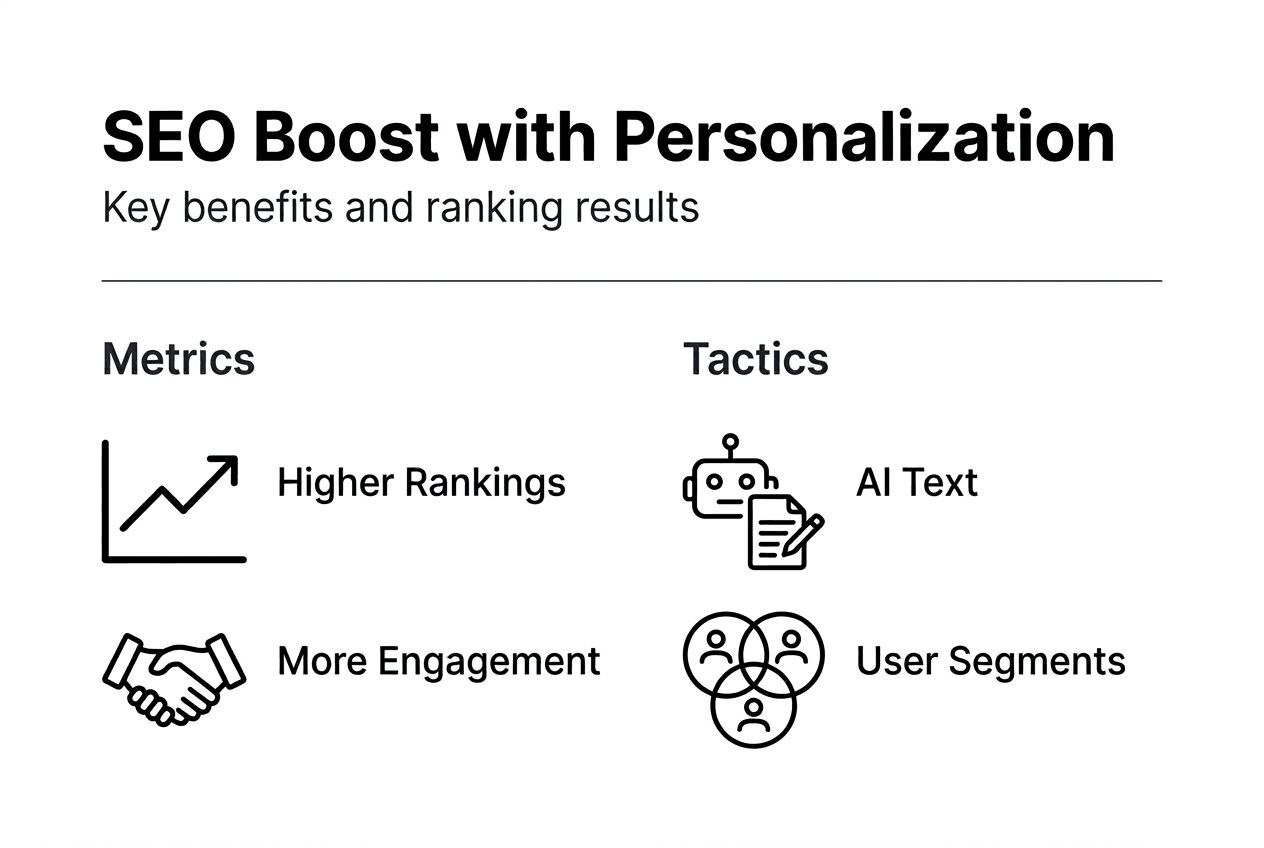
Engagement metrics show consistent gains when content adapts to user behavior. Time on page increases over 40% as personalized messaging holds attention more effectively. Scroll depth improves because content addresses specific interests. Click-through rates on internal links jump when recommendations match current needs.
Conversion rates improve approximately 20% with hyper-personalized content. Tailored product recommendations, customized calls to action, and individualized messaging remove friction from the customer journey. Personalized CTAs perform 202% better than generic calls to action by speaking directly to user motivations.
| Approach | SEO Ranking | Engagement Rate | Conversion Rate |
|---|---|---|---|
| Static Content | Baseline | Baseline | Baseline |
| Traditional Personalization | +10% to 15% | +15% to 20% | +8% to 12% |
| AI-Driven Dynamic Personalization | +25% to 35% | +35% to 45% | +18% to 25% |
Email marketing benefits significantly from personalized subject lines and body content. Open rates increase when subject lines reference recent browsing behavior or abandoned cart items. Click rates improve when email content matches documented interests.
Lead conversion jumps when personalized content guides prospects through customized nurture sequences. AI identifies where each lead sits in the buying journey and delivers appropriate next-step content. This precision reduces wasted touches and accelerates sales cycles.
Key performance benchmarks to track include:
These metrics provide concrete evidence of personalization ROI. Track them consistently to identify which personalization strategies deliver the strongest results. Use performance data to refine targeting, content generation, and humanization approaches continuously.
Ready to implement AI personalization that drives real results? Semihuman AI provides specialized tools designed to help marketers create authentic, high-performing personalized content at scale.
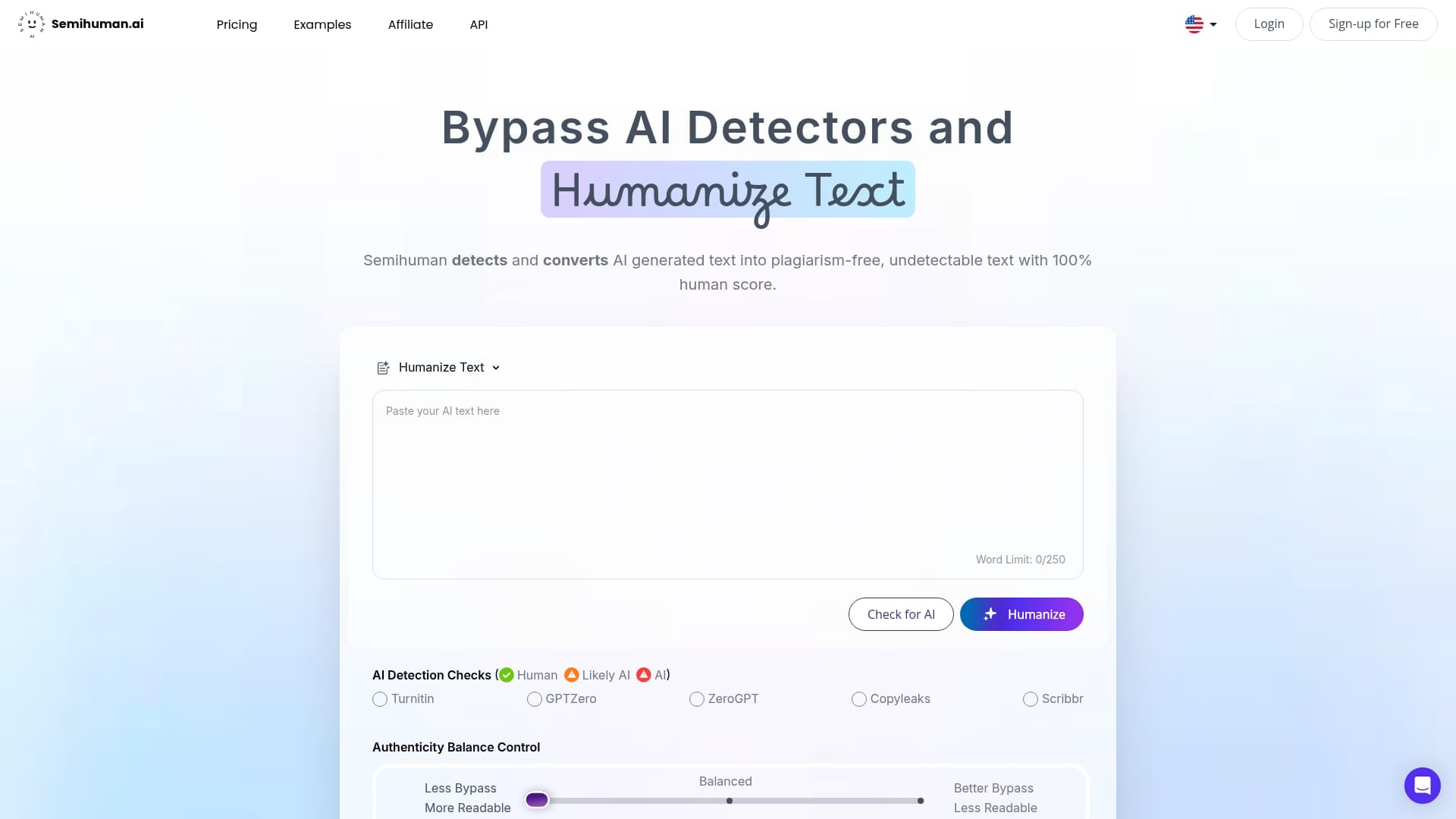
Our SEO text generator creates personalized content variations optimized for search rankings and user engagement. The AI proof writing tool ensures your personalized content passes detection systems while maintaining natural human quality. Our AI text paraphraser transforms robotic AI output into compelling copy that resonates with your audience.
These tools integrate seamlessly into your personalization workflow, helping you balance automation efficiency with human authenticity. Generate personalized content quickly, then enhance it with humanization features that reduce detection rates and improve engagement.
Pro Tip: Integrate Semihuman AI tools early in your content workflow to establish consistent quality standards before scaling personalization across your entire marketing operation.
First-party demographic, psychographic, and behavioral data collected with explicit user consent forms the foundation for accurate AI personalization. This includes browsing history, purchase patterns, email engagement, and stated preferences. Privacy compliance through CCPA and GDPR adherence ensures lawful, sustainable data practices.
Apply manual editing to refine AI output, vary sentence structure to create natural rhythm, and incorporate emotional language that addresses reader experiences. Use storytelling elements like specific examples and relatable scenarios. Specialized humanize AI content techniques reduce detectability from 85% to under 30% while enhancing reader engagement.
Avoid ignoring user consent and privacy regulations, which creates legal liability and erodes trust. Balance automation with human editorial oversight to prevent robotic tone that disengages readers. Incorporate real-time behavioral data rather than relying on outdated profiles. Use strategic keyword integration that maintains readability instead of stuffing terms unnaturally.
AI personalization can boost SEO rankings up to 35% by better satisfying search intent and engagement signals. Expect engagement increases exceeding 40% in time on page and scroll depth as content becomes more relevant. Conversion rates typically improve 18% to 25% through personalized messaging. Personalized CTAs perform over 202% better than generic alternatives, dramatically improving lead generation and sales outcomes.

Start
Humanizing
for Free!
Humanize