
Loading...

You've heard AI content kills SEO rankings. That's not quite true. Recent studies show humanized AI content improves traffic by 25% while poorly optimized AI text struggles. This article breaks down how AI really impacts search rankings, why humanization matters, and actionable steps to optimize your AI-generated content for better visibility and engagement in 2026.
| Point | Details |
|---|---|
| AI powers modern search algorithms | Search engines use AI like MUM to understand intent, quality, and context beyond keywords. |
| Detection tools influence rankings | Flagged AI content can drop 30% to 50% in rankings if it lacks human qualities. |
| Humanization boosts performance | Adding natural style improves dwell time by 15% to 25% and reduces detection by 40%. |
| Quality trumps origin | Google doesn't penalize AI content automatically; user engagement and trust matter most. |
| Strategic optimization works | Practical humanization techniques deliver measurable SEO gains and higher organic traffic. |
Search engines evolved rapidly over the past few years. Google and Bing now rely on sophisticated AI models to interpret what users actually want when they type a query. AI systems like Google MUM analyze content across multiple languages and formats to improve search relevance. This shift means keyword stuffing no longer works.
Modern algorithms prioritize semantic understanding. They evaluate whether your content genuinely answers user intent, delivers expertise, and keeps readers engaged. AI-enhanced quality assessments now drive rankings more than mechanical optimization tricks. Content creators must adapt their SEO strategies to meet these seo benefits of ai humanization standards.
Here's what changed:
Think of it this way. Old SEO was about talking to a robot. New SEO is about creating content that AI understands and humans love. You need both elements working together.
AI doesn't just tweak rankings at the margins. It fundamentally reshapes how search engines decide what content deserves top positions. Advanced natural language processing models decode complex search intent that traditional algorithms missed entirely. When someone searches for "best running shoes for flat feet," AI recognizes they want product recommendations with specific biomechanical benefits, not just shoe stores.

RankBrain and MUM leverage AI to assess E-A-T signals: Expertise, Authoritativeness, and Trustworthiness. These systems evaluate whether your content comes from credible sources, demonstrates genuine knowledge, and builds reader confidence. AI improves searcher intent understanding by over 30% using NLP models that parse sentence structure, context, and semantic relationships.
Key mechanisms include:
The result? Search results feel more relevant because AI spots patterns humans can't see. Your content needs to satisfy both algorithmic quality checks and deliver genuine value to readers. Data-driven content optimization strategies help you meet these dual requirements effectively.
AI detection systems identify text patterns typical of machine-generated content. Tools like GPTZero, Turnitin, and Copyleaks scan for telltale signs: repetitive phrasing, unnatural sentence structure, and predictable word choices. When your content gets flagged, search engines may interpret it as low-quality or untrustworthy, even if the information itself is accurate.

Tools like GPTZero and Turnitin detect AI text and can cause 30% to 50% ranking losses. Detection correlates with reduced trust signals that search algorithms value highly. Your perfectly factual article might underperform simply because it reads too mechanically. That's the hidden SEO cost of unmodified AI content.
Why detection matters:
Marketers face a critical decision. You can generate content quickly with AI, but publishing it raw creates ranking risks. The solution isn't avoiding AI entirely. Instead, you need to understand content detection impact and apply humanization techniques that preserve AI efficiency while adding authentic human qualities.
Humanizing AI text means restructuring sentences, replacing generic phrases with natural variations, and placing keywords where they flow organically. This process transforms mechanical output into engaging content that readers enjoy and search engines reward. You're not deceiving anyone; you're refining AI drafts the same way you'd edit any first draft.
Humanized AI text improves readability and dwell time by 15% to 25% and reduces AI detection by up to 40%. Better readability keeps visitors on your page longer. Longer dwell time signals content quality to search algorithms. Reduced detection rates mean fewer trust penalties. These factors combine to lift your rankings substantially.
Core humanization techniques:
Pro Tip: Read your AI-generated content aloud before publishing. If it sounds robotic or puts you to sleep, readers will bounce quickly. Revise until it sounds like something you'd say to a colleague explaining the topic over coffee.
Combining AI speed with human touches creates optimal SEO content. You draft 10 times faster than writing from scratch, then spend focused time adding authenticity. This workflow scales better than pure human writing while delivering quality that humanized seo best practices demand. Learn how to humanize ai text effectively to maximize your content ROI.
Many marketers fear Google will penalize all AI-generated content automatically. That's false. Google does not explicitly penalize AI content; ranking depends on quality, E-A-T, and user signals rather than AI origin. The search giant cares whether your content helps users, not whether a human or machine wrote the first draft.
Detection penalties relate more to poor quality and lack of trust than AI origin per se. If your AI content reads like generic filler with no unique insights, it'll rank poorly regardless of how it was created. The same applies to thin human-written content. Quality standards apply universally.
Myth-busting facts:
Understanding these facts helps you avoid unnecessary fear and use AI strategically. You don't need to hide that you use AI tools. You just need to ensure the final output meets quality standards. Many top-ranking articles use AI assistance in research, outlining, or drafting. The difference is they invest effort in refinement and humanization.
Clear content detection misconceptions so you can focus on what actually drives rankings: creating valuable, engaging content that serves your audience better than competing pages.
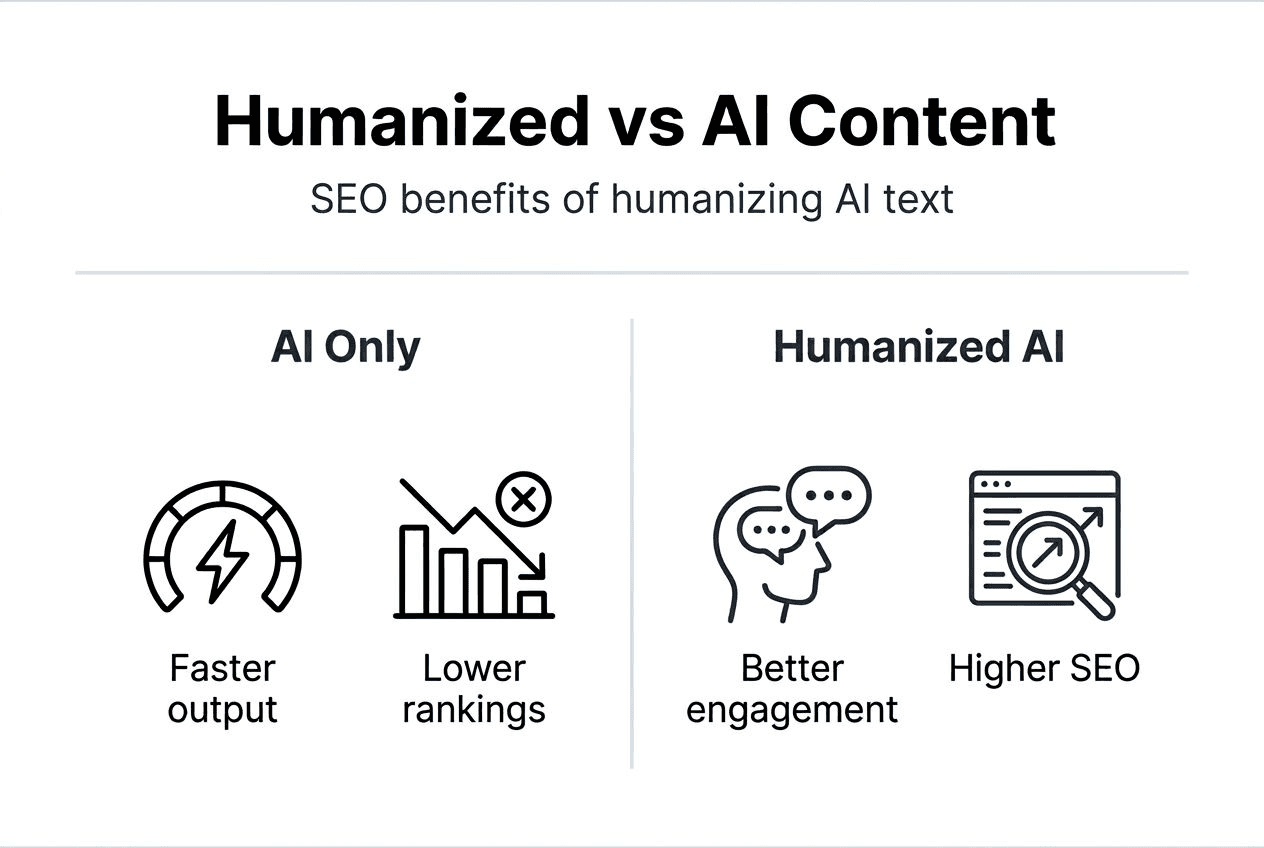
Data reveals stark performance differences between raw AI output and humanized versions. Unhumanized AI content ranks on average 60% lower than humanized AI content when targeting competitive keywords. That gap translates directly into lost traffic and missed business opportunities.
| Metric | Unhumanized AI Content | Humanized AI Content |
|---|---|---|
| Average ranking position | 45-60 | 15-25 |
| Organic traffic | Baseline | +25% increase |
| Bounce rate | 68% | 52% |
| Dwell time | 45 seconds | 95 seconds |
| AI detection score | 85-95% | 15-30% |
| Click-through rate | 1.2% | 2.8% |
Humanized AI content shows 25% traffic increase and up to 40% reduced detection versus unhumanized AI content. These aren't marginal improvements. They represent the difference between content that languishes on page five and content that drives consistent organic traffic.
Real-world case studies confirm the pattern:
Investment in humanizing AI content yields measurable SEO performance advantages. You spend a fraction of the time compared to writing from scratch, yet achieve results matching or exceeding traditional content. The key is treating AI as a drafting tool, not a publish-ready solution. Check out top ai content humanizers to find tools that streamline this process.
Ready to put theory into practice? Start by assessing your AI content quality honestly. Run drafts through detection tools to establish a baseline. Check readability scores. Most importantly, read it yourself and note where it feels generic or unnatural.
Follow these steps systematically:
Pro Tip: Create a personal style guide with preferred phrases, transition words, and voice characteristics. Apply this consistently when humanizing AI content to develop a recognizable brand voice that readers trust.
Using AI-humanizing platforms like Semihuman.ai enhances authenticity and user engagement, boosting SEO performance. These specialized tools automate many humanization steps while preserving your unique voice. They handle synonym replacement, sentence restructuring, and detection evasion at scale.
Focus on enhancing E-A-T signals consistently. Add author credentials where appropriate. Link to authoritative sources. Include original research or case studies. These elements build trust that search algorithms reward. Monitor SEO metrics and detection reports to adjust strategies dynamically as algorithms evolve. Explore ai content optimization tips and data-driven content optimization approaches to refine your process continuously.
AI continues transforming search algorithms and ranking criteria at an accelerating pace. What worked in 2024 may underperform in 2026 as models grow more sophisticated. Humanizing AI-generated content isn't just a current tactic; it's an essential long-term SEO strategy. Search engines will keep prioritizing authentic, engaging content that serves users genuinely.
Content creators must stay updated on detection methods and ranking changes. The landscape shifts quarterly as new AI models deploy and detection tools improve. Building flexible workflows that combine AI efficiency with human creativity positions you to adapt quickly. Ethical optimization that supports authenticity and user trust will always outperform manipulation attempts.
Ongoing refinement of AI-human workflows will define future SEO success. Those who master this balance scale content production while maintaining quality standards that search engines reward. Your competitive advantage comes from speed plus authenticity, not one or the other.
You've seen how humanization transforms AI content performance. Now apply these insights immediately with tools built specifically for this challenge. Semihuman AI specializes in converting generic AI text into authentic, engaging content that ranks well and keeps readers engaged.
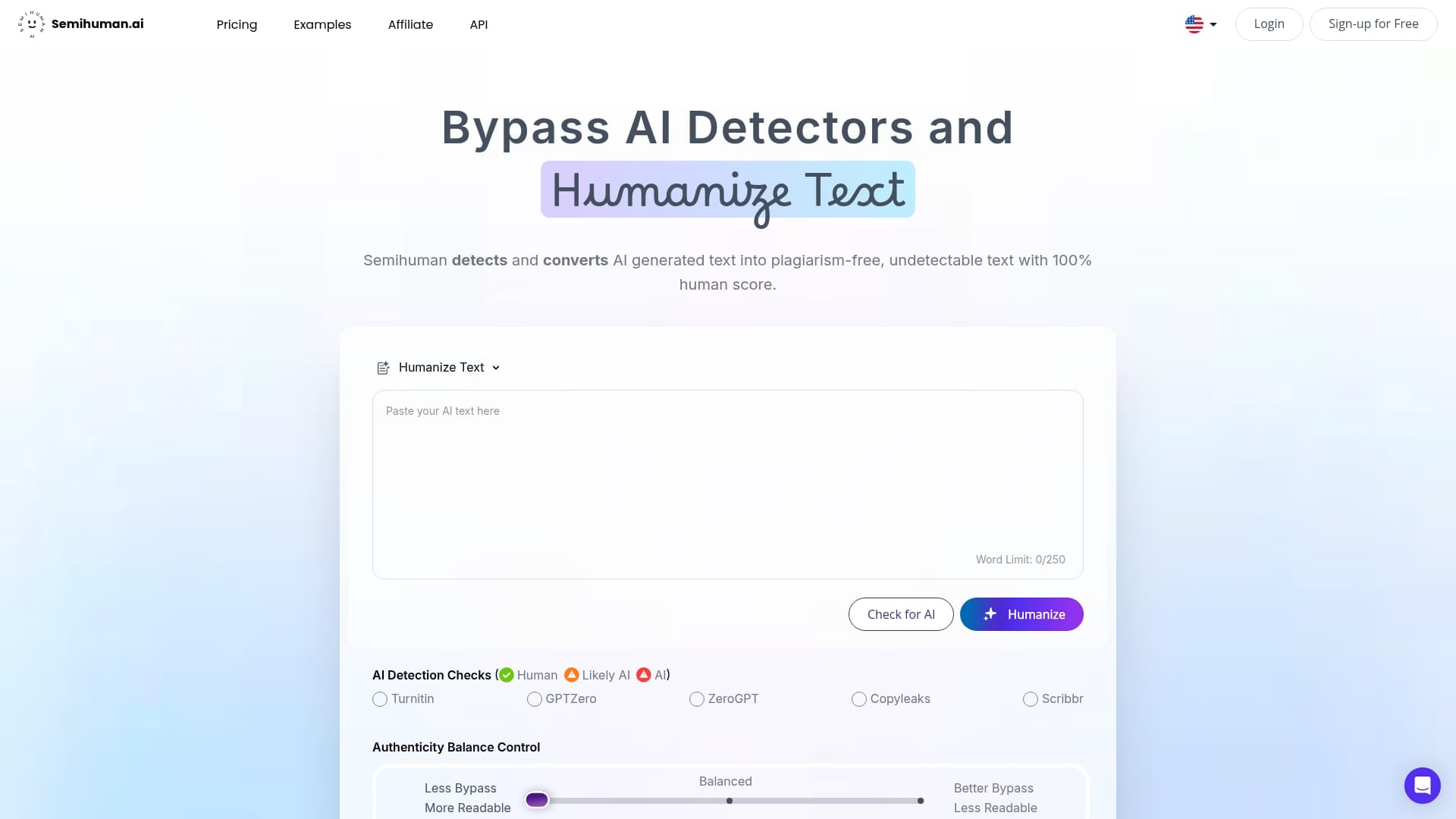
Semihuman AI offers powerful features including intelligent ai text paraphraser technology that restructures sentences naturally, proven methods to bypass ai detectors effectively, and an advanced seo text generator optimized for search visibility. These tools work together seamlessly, supporting improved engagement and Google ranking without penalties. Integration into your existing content workflows takes minutes, not days. Try Semihuman AI to unlock your content's full SEO potential and achieve the ranking improvements you've been missing.
AI detection tools identify machine-generated text patterns, influencing how search engines perceive content trustworthiness. High detection rates often correlate with lower rankings when content lacks natural human qualities and authentic engagement signals.
Check for natural sentence flow, varied vocabulary, and contextual keyword integration throughout your text. Use specialized AI-humanization tools and review detection feedback scores to measure and improve text authenticity before publishing.
No, search engines don't penalize content based solely on AI origin. Ranking success depends primarily on content quality, E-A-T signals, user engagement metrics, and whether the content genuinely helps readers solve problems.
Apply systematic text restructuring, synonym replacement, and natural keyword integration to transform mechanical output. Leverage AI-humanizing platforms like Semihuman.ai for scalable, consistent improvement that reduces detection while boosting engagement.
Yes, properly humanized AI content frequently achieves higher engagement and rankings than traditional content. The strategic combination of AI efficiency with human creativity and authentic touches maximizes both production speed and SEO impact.


Start
Humanizing
for Free!
Humanize