
Loading...

AI-generated content has become ubiquitous across digital marketing, academic writing, and creative industries. However, mechanical text that lacks authentic human voice creates serious problems. Robotic AI writing reduces reader engagement, hurts SEO performance, and triggers detection tools that flag content as inauthentic. Content creators, marketers, and academics now face mounting pressure to produce material that sounds genuinely human while leveraging AI efficiency. Humanizing AI-generated text addresses these challenges by transforming sterile output into natural, engaging prose that builds trust with audiences and search engines alike. This article explores the proven advantages of AI humanization, backed by recent data and expert insights, to help you create content that performs.
| Point | Details |
|---|---|
| E E A T alignment | Humanized text aligns with Google E E A T to improve perceived expertise and trust, boosting SEO rankings. |
| CTR and shares boost | Studies show CTR doubles and social shares rise about 30 percent when AI content is humanized. |
| Hybrid AI human workflows | Combining AI efficiency with human editorial judgment yields consistent quality and scalable authenticity. |
| Audience tailored messaging | Tailoring tone and structure to marketers, academics, and creators improves engagement and relevance. |
| Careful methodology | Following a structured five step process helps avoid penalties and readability issues. |
Successful AI humanization requires specific techniques that transform mechanical output into authentic prose. The core strategy involves varying sentence length and using contractions to mimic natural speech patterns. Short, punchy statements followed by longer explanatory sentences create the rhythm readers expect from human writers. Contractions like "you're" and "it's" replace formal constructions, instantly warming the tone.
Replacing common AI phrases represents another critical step. Words like "delve," "comprehensive," and "multifaceted" scream artificial origin. Swap these for conversational alternatives that your target audience actually uses in daily communication. Personal pronouns matter too. Direct address using "you" and inclusive "we" statements forge connections that third-person academic voice cannot match.
To humanize AI content for SEO effectively, follow these five methodological steps:
Pro Tip: Balance is everything when humanizing content. Over-editing can create confusion or introduce errors that harm readability. Aim for natural flow that preserves clarity while adding authentic voice. The goal is content that feels effortlessly human, not aggressively casual.
Effective humanization also means understanding your audience's expectations. Marketers need persuasive, benefit-driven language. Academics require evidence-based arguments with proper attribution. Content creators want engaging narratives that hold attention. Tailor your humanization approach to match these distinct needs rather than applying generic fixes.
The technical execution matters as much as the creative approach. Tools that improve content authenticity naturally analyze linguistic patterns and suggest targeted revisions. However, automated solutions alone rarely achieve optimal results. Hybrid workflows combining AI efficiency with human editorial judgment deliver the most consistent quality.
Humanized AI content delivers measurable performance improvements across multiple metrics. Research shows humanized content boosts CTR by 2x and increases social shares by 30% compared to unmodified AI output. These engagement gains translate directly into better audience retention and conversion rates for marketers.
Search engine optimization represents another major advantage. Google's algorithm rewards experience, expertise, authority, trust when evaluating content quality. Humanized text naturally incorporates the conversational patterns and authentic insights that signal genuine human authorship. This alignment with E-E-A-T guidelines helps content rank higher while avoiding penalties for thin or low-value AI-generated material.
The specific benefits of AI humanization include:
Key Statistic: Content that successfully passes as human-authored generates 2x higher click-through rates and 30% more social shares, while also achieving better search visibility through improved E-E-A-T alignment.
For content authenticity for marketers, these advantages compound over time. Audiences develop trust in brands that consistently deliver valuable, naturally written content. This trust becomes a competitive moat that generic AI content cannot replicate. Email campaigns, blog posts, and social media updates all benefit from humanized text that feels personally crafted rather than mass-produced.
The SEO advantages extend beyond rankings alone. Humanized content naturally incorporates semantic variations and contextual depth that satisfy user intent more completely. Search engines reward this comprehensiveness with featured snippets, knowledge panel inclusions, and other visibility enhancements. Your AI content personalization tactics become more effective when the underlying text reads authentically.

Brand building through consistent voice represents perhaps the most strategic advantage. Organizations that maintain authentic communication across all channels create stronger emotional connections with audiences. Humanized AI enables scaling this consistency without sacrificing quality or overwhelming human writers with production demands.
AI detection tools have become increasingly sophisticated, creating challenges for content creators and academics using AI assistance. However, proper humanization dramatically reduces detection probability. Studies demonstrate humanization reduces detection rates from 97-99% to under 2% when applied correctly. This reduction enables safer deployment of AI-assisted content across academic, marketing, and creative contexts.
Detection performance varies significantly across popular tools:
| AI Detector | Detection Rate (Raw AI) | Detection Rate (Humanized) | Effectiveness |
|---|---|---|---|
| GPTZero | 98% | 3% | High reduction |
| Turnitin | 97% | 2% | High reduction |
| Copyleaks | 99% | 4% | High reduction |
| Originality.ai | 96% | 5% | Moderate reduction |
| Content at Scale | 95% | 8% | Moderate reduction |
The table reveals that while all major detectors flag raw AI content reliably, humanization techniques reduce detection across the board. However, no method achieves perfect invisibility, making ethical disclosure important in sensitive contexts.
"Peer-reviewed research confirms that AI humanization substantially decreases detection probability across multiple platforms. However, creators must balance technical evasion with ethical transparency, particularly in academic settings where AI assistance disclosure may be required regardless of detection risk."
For academics, this creates both opportunity and responsibility. Humanization allows legitimate use of AI as a research and writing aid while maintaining academic integrity through proper attribution. Students and researchers can leverage AI efficiency without triggering false plagiarism flags that damage academic standing.
Pro Tip: Always manually review humanized content before submission or publication. Automated humanization occasionally introduces grammatical errors or awkward phrasing that human editors catch immediately. In academic contexts, disclose AI assistance even when detection risk is minimal to maintain ethical standards and institutional trust.
Compliance extends beyond detection evasion. Many platforms and institutions now have explicit policies regarding AI-generated content. Humanization helps meet these requirements by ensuring content reflects genuine human input and editorial judgment. The top AI content humanizers provide documentation features that track revisions and human contributions, supporting compliance workflows.
The ethical dimension matters as much as the technical capability. Humanization should enhance rather than deceive. When AI assists in research, ideation, or drafting, the final product still requires human expertise, fact-checking, and quality control. This hybrid approach satisfies both detection tools and ethical standards.
Selecting the right humanization approach depends on your specific needs, budget, and quality requirements. The market offers various tools with different strengths and limitations.
| Tool | Detection Bypass | Ease of Use | Output Quality | Best For |
|---|---|---|---|---|
| Writesonic | Moderate | High | Variable | Quick marketing content |
| QuillBot | Moderate | High | Good | Paraphrasing and variety |
| Semihuman AI | High | High | Excellent | SEO and detection evasion |
| Manual editing | Highest | Low | Excellent | Academic and premium content |
| Hybrid workflow | High | Moderate | Excellent | Scalable quality content |
Research indicates Writesonic and QuillBot show inconsistent detection avoidance without manual refinement. These tools excel at surface-level paraphrasing but may not address deeper linguistic patterns that advanced detectors flag. Users often need multiple passes and human review to achieve reliable results.
Key considerations when choosing humanization tools:
The most effective approach combines automated tools with human oversight. AI handles initial humanization, transforming robotic patterns into more natural language. Human editors then refine nuance, verify accuracy, and ensure brand voice consistency. This hybrid model delivers both efficiency and quality.
For those comparing AI content humanizers, testing multiple options with your actual content reveals practical differences. Run samples through different tools and evaluate detection rates, readability scores, and audience engagement metrics. What works for blog posts may not suit academic papers or technical documentation.
Over-humanization presents its own risks. Excessive casualness can undermine authority in professional contexts. Too many colloquialisms confuse international audiences or readers unfamiliar with specific cultural references. The goal is natural authenticity, not forced informality.
Academic users face unique challenges. Institutions increasingly require AI disclosure regardless of detection probability. Tools that document the humanization process and track human contributions help satisfy these requirements while maintaining writing efficiency. Balancing tech and authenticity becomes essential for long-term academic success.
Budget constraints often drive tool selection, but quality should remain the primary consideration. Poor humanization that fails detection or produces awkward prose wastes resources and damages reputation. Investing in reliable solutions pays dividends through better performance and reduced revision cycles.
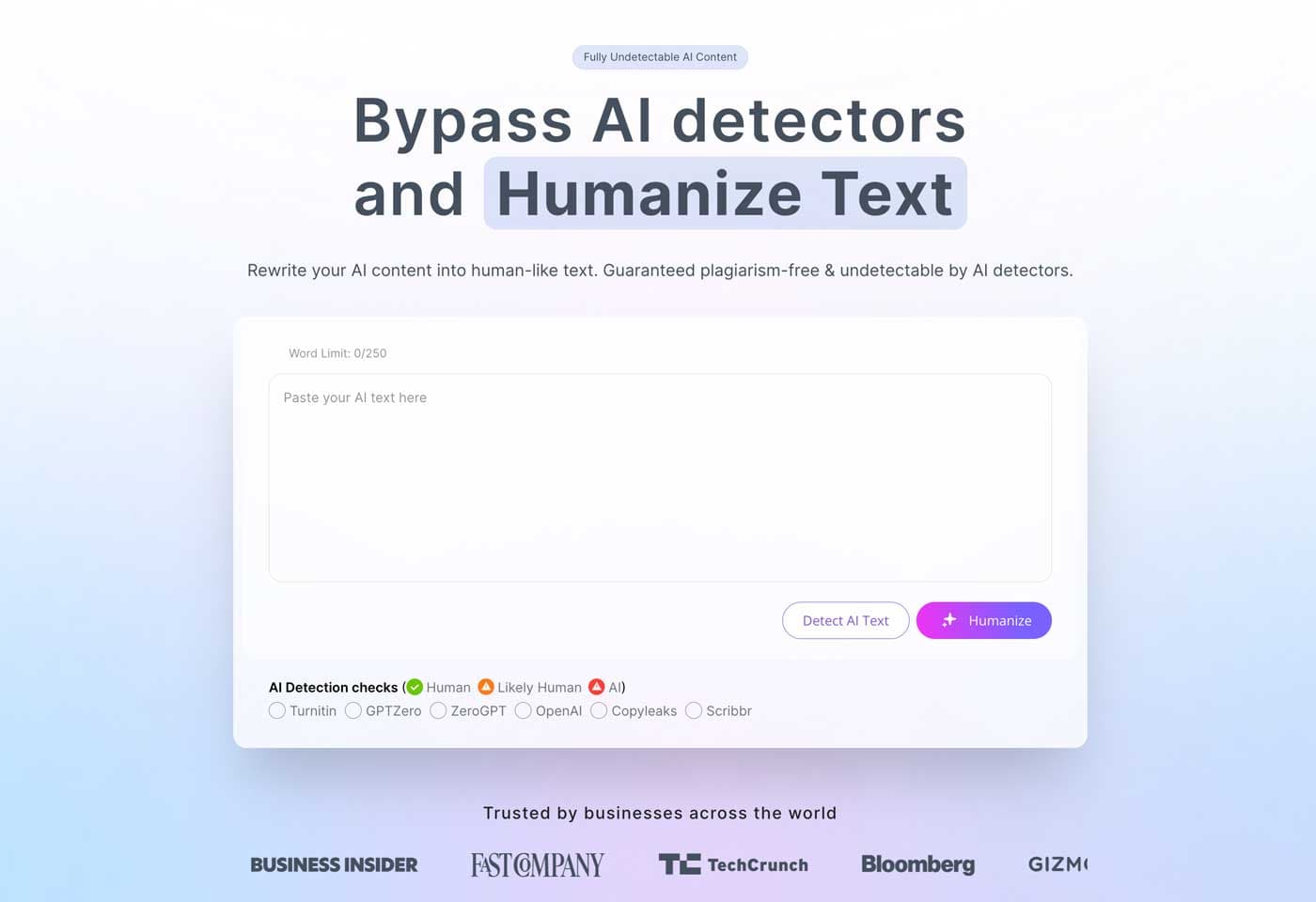
Transforming AI-generated text into authentic, engaging content requires specialized tools designed for modern content challenges. Semihuman AI offers advanced solutions specifically engineered to humanize AI content while improving SEO performance and bypassing detection systems.
Our platform addresses the exact pain points content creators, marketers, and academics face daily. Whether you need to bypass AI detectors for compliant content deployment or generate SEO-optimized text that ranks, Semihuman AI delivers measurable results.
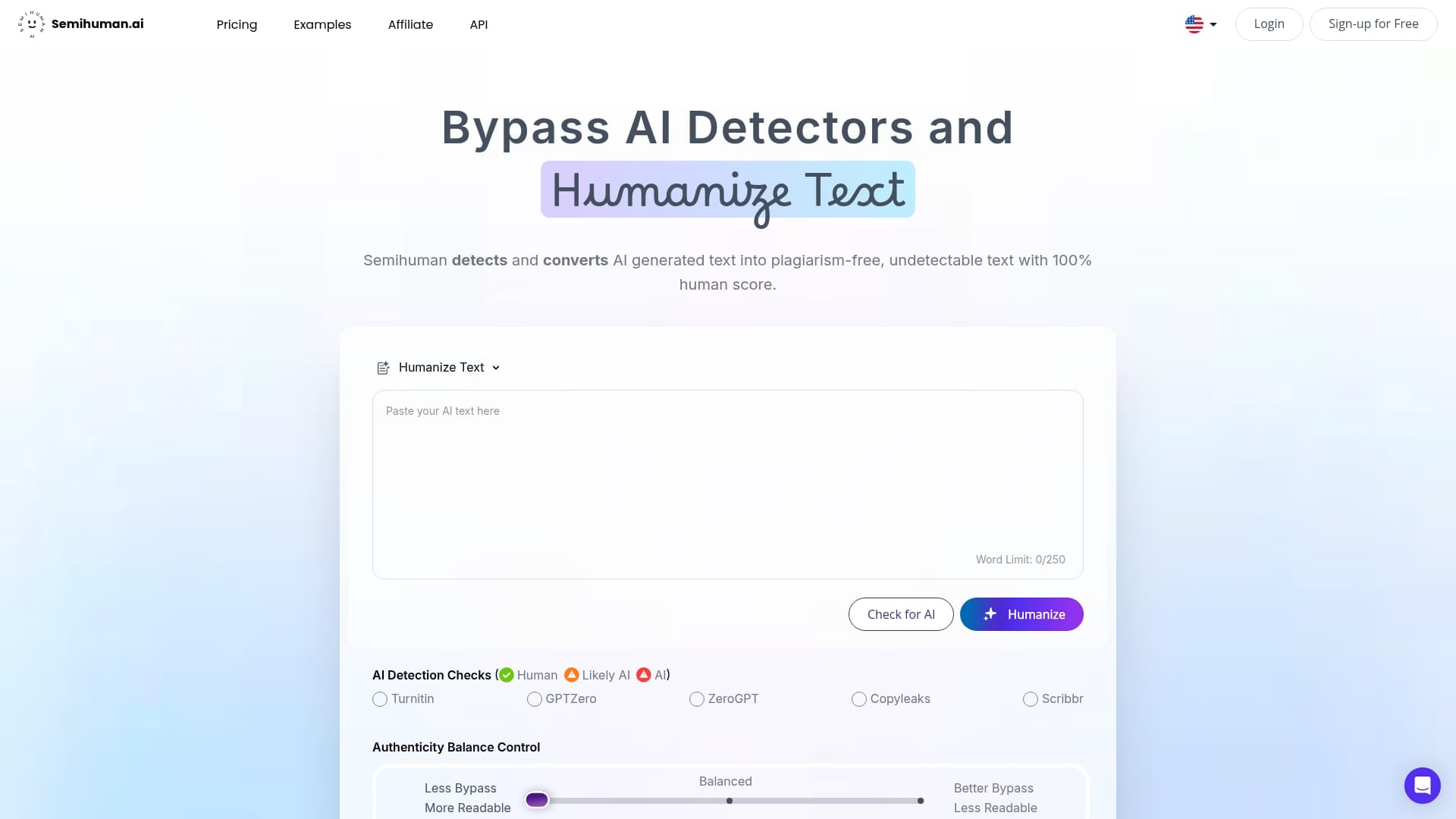
The SEO text generator creates naturally flowing content that aligns with search engine quality guidelines while maintaining authentic voice. Our intelligent AI text paraphraser restructures sentences and vocabulary to eliminate robotic patterns without sacrificing clarity or meaning.
Marketers appreciate the scalability our tools provide. Generate humanized content at volume without compromising quality or brand consistency. Academics benefit from detection evasion combined with ethical documentation features that support institutional compliance requirements. Creators gain efficiency while preserving the authentic voice that builds audience trust.
Discover how incorporating Semihuman AI into your content strategy delivers better engagement metrics, improved search rankings, and authentic communication that resonates with your target audience.
Humanized content aligns with Google's E-E-A-T quality guidelines by demonstrating genuine expertise and authentic voice. Search algorithms favor natural language patterns and conversational tone that humanization provides. This alignment improves rankings while reducing risk of penalties for thin AI content. Users also engage longer with naturally written material, sending positive behavioral signals that humanize content for SEO rankings boost further.
Yes, proper humanization significantly lowers detection probability across major platforms. Research shows detection rates dropping from over 95% to under 5% with effective techniques. However, results vary by tool and content type. Manual review remains important to catch any remaining artifacts. Ethical use requires disclosure in academic contexts regardless of detection risk. Compare different AI content humanizers to find solutions matching your specific needs.
Over-humanizing content can reduce clarity and confuse readers with excessive casualness or colloquialisms. Inconsistent tool performance means some automated solutions introduce grammatical errors or awkward phrasing requiring manual correction. Ethical concerns arise when humanization obscures AI involvement in contexts requiring disclosure. Academic institutions may consider undisclosed AI use as integrity violations even when detection tools fail to flag content. Always balance efficiency with transparency and quality control.
Hybrid approaches combine AI efficiency with human judgment to deliver optimal results. Automated tools handle initial pattern transformation and linguistic restructuring at scale. Human editors then refine nuance, verify factual accuracy, and ensure brand voice consistency. This division of labor maximizes productivity while maintaining quality standards that fully automated processes cannot match. The combination addresses both technical detection evasion and authentic audience connection.


Start
Humanizing
for Free!
Humanize