
Loading...

More than 60 percent of American educators report uncertainty about upholding academic integrity as artificial intelligence tools become more widespread in classrooms. The rapid shift toward digital learning challenges long-held values of honesty and originality for both students and faculty. As AI transforms academic standards, understanding how to maintain trust and fairness matters more than ever. This guide reveals practical steps for navigating ethical challenges and upholding the core principles of academic honor in the AI era.
| Point | Details |
|---|---|
| Embrace AI Collaboratively | Treat AI tools as collaborative partners that enhance your research, ensuring clear documentation of AI use. |
| Prioritize Originality | Maintain personal intellectual contributions and critical evaluation of AI-generated content. |
| Adapt Assessment Methods | Institutions should redesign assessment strategies to emphasize original thinking and authentic comprehension over mechanical information reproduction. |
| Promote Transparency | Foster open dialogue regarding AI use and establish clear policies that guide ethical engagement with technology in academic settings. |
Academic integrity represents a fundamental ethical framework that upholds core values of honesty, trust, fairness, respect, and responsibility in educational settings. As artificial intelligence technologies rapidly transform academic environments, understanding and preserving these principles becomes increasingly complex. Academic integrity indicators now require sophisticated evaluation frameworks that can adapt to emerging technological challenges.
In the contemporary academic landscape, academic integrity extends beyond traditional concepts of avoiding plagiarism. It now encompasses responsible engagement with AI technologies, critically examining how these tools are utilized in research, writing, and learning processes. Students and researchers must develop nuanced strategies that leverage AI's potential while maintaining intellectual originality and ethical standards. Generative AI can be ethically integrated into educational experiences when approached with thoughtful consideration of learning objectives and academic principles.
Key elements of academic integrity in the AI era include transparent AI usage disclosure, understanding algorithmic limitations, maintaining personal intellectual contribution, and developing critical evaluation skills. Institutions are increasingly developing robust policies that define acceptable AI assistance, recognizing that blanket prohibitions are less effective than guided, responsible engagement. This approach requires educators to redesign assessment methods that encourage critical thinking and demonstrate genuine comprehension rather than mere information reproduction.
Students navigating this complex terrain must prioritize personal learning and intellectual growth over technological shortcuts. Developing strong research skills, maintaining academic honesty, and cultivating a deep understanding of subject matter remain paramount, regardless of available technological tools.
Here is a summary of key academic integrity pillars and their significance in the AI era:
| Pillar | Traditional Meaning | New Consideration (AI Era) |
|---|---|---|
| Honesty | Avoiding plagiarism and cheating | Disclosing AI use, being transparent |
| Responsibility | Submitting personal, original work | Balancing AI assistance and ownership |
| Fairness | Equal opportunity for assessment | Equitable access to AI tools |
| Respect | Valuing others' intellectual work | Recognizing AI-generated authorship |
| Trust | Building reliable academic culture | Maintaining trust in digital contexts |
Pro Research Strategy: Treat AI tools as collaborative assistants, not substitutes for personal intellectual work. Always critically evaluate and substantially modify AI-generated content to ensure your unique perspective and understanding are evident.
Artificial intelligence technologies are fundamentally reshaping academic integrity frameworks, introducing unprecedented challenges and opportunities for educational institutions. Systematic reviews reveal complex impacts of generative AI on academic standards, highlighting the need for nuanced approaches to technological integration. The traditional boundaries of academic honesty are being redrawn as AI tools become increasingly sophisticated and accessible to students and researchers.

The profound transformation extends beyond simple plagiarism concerns. Academic honesty now requires a more sophisticated understanding of AI's capabilities and limitations. Generative AI models introduce significant social justice considerations that challenge existing detection mechanisms and evaluation frameworks. Students must navigate complex ethical terrain, distinguishing between legitimate AI assistance and academic misconduct. This requires developing critical digital literacy skills that go beyond traditional research and writing competencies.
Institutions are responding by redesigning assessment strategies that emphasize original thinking, critical analysis, and demonstrable comprehension. Emerging approaches include real-time writing assessments, oral examinations, project-based evaluations, and more dynamic assignment structures that cannot be easily replicated by AI tools. The goal is to create learning environments that value personal intellectual growth and authentic knowledge creation over mechanical information reproduction.
The integration of AI into academic settings demands a collaborative approach among educators, students, and technological experts. Transparent policies, ongoing dialogue, and adaptive strategies will be crucial in maintaining academic integrity while responsibly leveraging technological innovations.
Pro Academic Strategy: Develop a personal AI engagement framework that treats artificial intelligence as a supportive research tool, not a substitute for independent intellectual work. Always maintain transparency about AI tool usage and critically evaluate generated content.
Artificial intelligence detection tools represent a critical technological response to the growing challenges of academic integrity in the digital age. Advanced machine learning algorithms are being developed to detect AI-generated content with increasing precision, introducing sophisticated approaches that go beyond traditional plagiarism detection methods. These emerging technologies leverage complex pattern recognition and linguistic analysis to distinguish between human-authored and AI-generated text.
The current landscape of detection technologies reveals both promising capabilities and significant limitations. While AI assessment frameworks show potential for reducing academic misconduct, no single tool provides a completely foolproof solution. Detection mechanisms typically analyze multiple linguistic markers, including sentence complexity, semantic coherence, stylistic consistency, and subtle algorithmic fingerprints that differentiate AI-generated text from human writing. However, as AI technologies continue to evolve, these detection tools must simultaneously advance to maintain their effectiveness.
Key challenges in AI content detection include managing false positive rates, addressing the rapid evolution of generative AI technologies, and maintaining ethical standards of student privacy. Educational institutions must balance sophisticated detection strategies with transparent policies that educate students about responsible AI use. This requires a nuanced approach that views AI as a potential learning tool rather than simply a threat to academic integrity.
The most effective detection strategies integrate technological solutions with comprehensive academic integrity education. This means developing student understanding of ethical AI use, creating assessment methods that emphasize original thinking, and maintaining open dialogue about technological capabilities and limitations.
The table below compares common AI detection tools and the main challenges they face:
| Detection Tool Feature | Capability Highlight | Limitation/Challenge |
|---|---|---|
| Linguistic Pattern Analysis | Detects AI-specific phrases | Susceptible to text paraphrasing |
| Semantic Coherence Checks | Identifies unusual patterns | Human writing can mimic AI structure |
| Stylometric Profiling | Assesses stylistic signature | Overfitting with diverse writing styles |
| Algorithmic Fingerprints | Spots known model outputs | Quickly outdated by new AI releases |
Pro Detection Strategy: Implement a multi-layered approach to AI content detection that combines technological tools, educational workshops, and adaptive assessment techniques. Regularly update detection methodologies to keep pace with emerging AI technologies.
Academic integrity confronts unprecedented challenges as students develop increasingly sophisticated strategies to circumvent AI detection technologies. The emergence of postplagiarism represents a complex ethical landscape where technological capabilities constantly challenge traditional academic norms. Students are exploring nuanced methods of AI interaction that blur the lines between assistance and misconduct, creating an intricate ethical ecosystem that demands careful navigation.
Evasion tactics range from subtle text modifications to advanced prompt engineering techniques designed to make AI-generated content appear more human-like. These strategies involve carefully restructuring sentences, introducing intentional imperfections, and mimicking individual writing styles to bypass detection algorithms. Institutional policies must proactively design frameworks to prevent systematic misuse of AI technologies, recognizing that punitive approaches are less effective than educational strategies that promote ethical technological engagement.

The ethical debate surrounding AI in academic settings extends beyond simple detection and prevention. It encompasses broader questions about the nature of learning, creativity, and intellectual development in an era of rapidly advancing technological capabilities. Educational institutions must balance technological vigilance with pedagogical approaches that view AI as a potential learning tool rather than merely a threat to academic integrity.
Critical to this discussion is the recognition that technological solutions alone cannot address the complex moral and educational challenges presented by generative AI. The most effective strategies will integrate technological tools, comprehensive education, and adaptive assessment methods that encourage original thinking and genuine intellectual engagement.
Pro Ethics Strategy: Develop a personal AI engagement framework that prioritizes transparency, intellectual honesty, and genuine learning objectives. Treat AI as a collaborative tool for exploration, not a shortcut to academic achievement.
Academic AI engagement requires a sophisticated approach that balances technological capabilities with intellectual integrity. The Academic Integrity and Creativity in the Age of Artificial Intelligence model proposes innovative assessment strategies that encourage authentic learning and original thinking. This framework emphasizes understanding AI as a collaborative tool rather than a replacement for personal intellectual effort.
Ethical AI content usage involves transparent methodology and critical evaluation. Students and researchers should adopt a systematic approach that includes: clearly documenting AI assistance, critically reviewing generated content, and maintaining personal intellectual contributions. Educators are increasingly concerned about potential AI-assisted academic misconduct, necessitating proactive strategies that transform AI from a potential threat to a legitimate learning resource.
Key best practices include developing a personal AI engagement framework that prioritizes intellectual honesty. This means using AI tools for research assistance, brainstorming, and initial drafting while ensuring that final work reflects individual understanding and creativity. Researchers should view AI as a supplementary tool that enhances critical thinking rather than a shortcut to completing academic assignments.
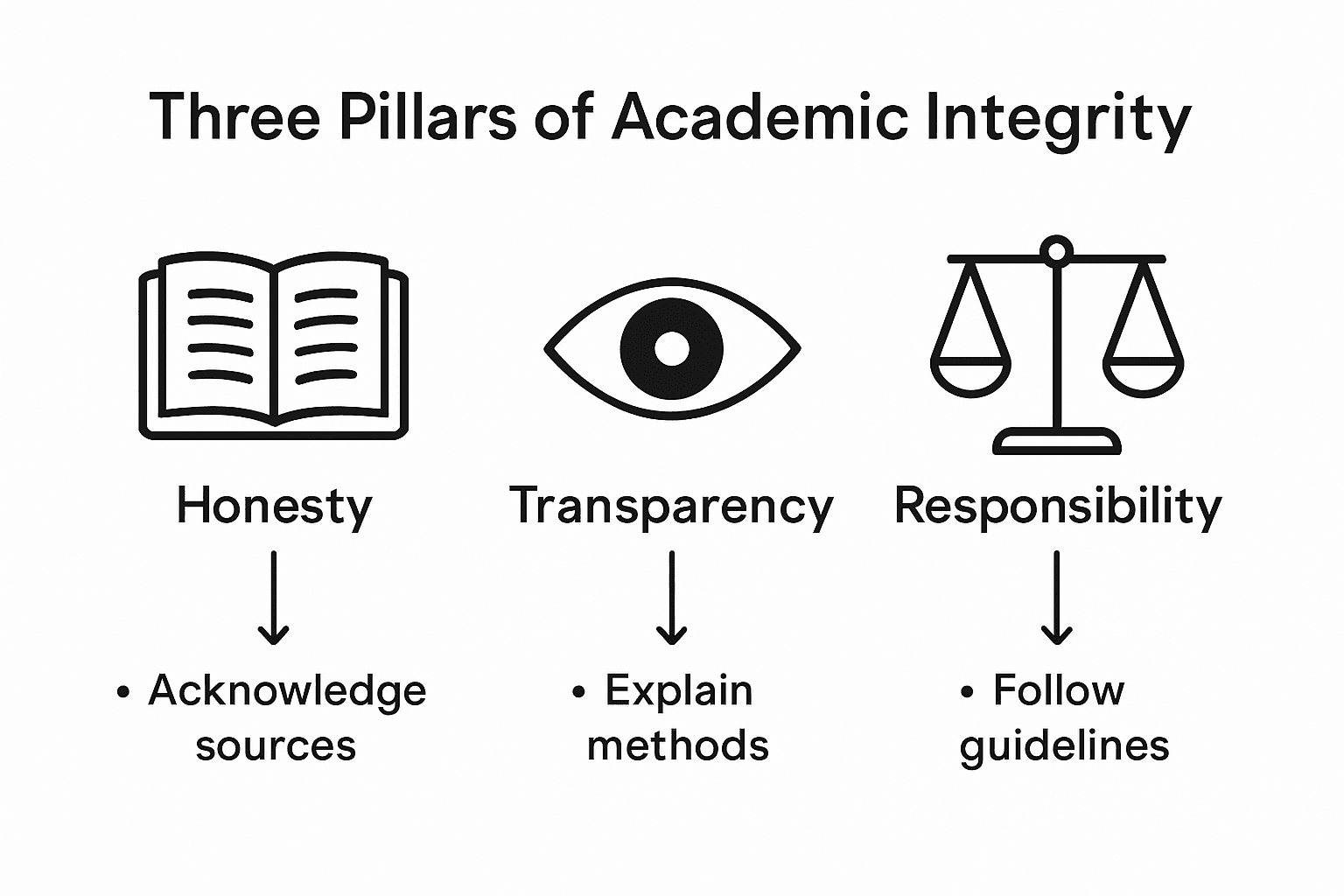
Institutional support is crucial in establishing clear guidelines for responsible AI use. This involves creating transparent policies, providing AI literacy training, and designing assessment methods that value original thinking and demonstrate genuine comprehension. The goal is to integrate AI technologies in ways that enhance learning outcomes while maintaining rigorous academic standards.
Pro Ethics Approach: Develop a personal AI transparency protocol that requires documenting all AI-generated content, critically evaluating algorithmic suggestions, and ensuring that your unique intellectual perspective remains the primary focus of any academic work.
Navigating the ethical challenges of AI in academia requires tools that uphold transparency and originality without sacrificing creativity. The article highlights the growing need to balance AI assistance with personal intellectual contribution while avoiding detection pitfalls and evasion tactics. Whether you aim to disclose AI use responsibly or ensure your writing reflects your unique voice, maintaining academic honesty is more important than ever.
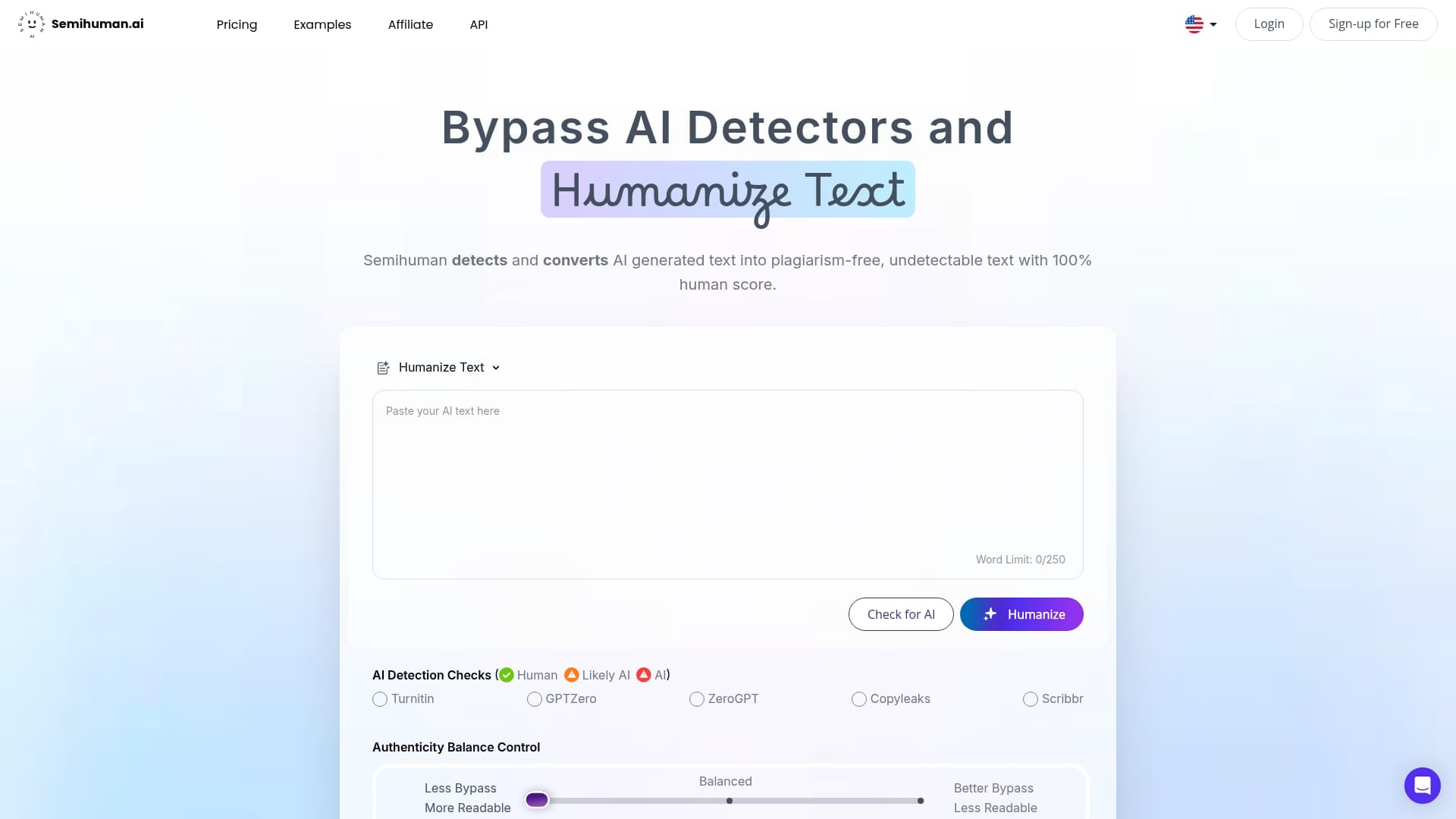
Discover how Semihuman.ai can support your academic journey by transforming AI-generated text into authentic, human-like content. Our platform offers advanced features such as text restructuring and keyword integration that help you maintain integrity while enhancing your writing’s natural tone and flow. Empower yourself to generate work that meets the highest standards of fairness, respect, and responsibility described in the article. Explore how you can ethically engage AI tools without compromising your originality by visiting Semihuman.ai today and experience smarter, compliant content creation.
Academic integrity in the AI era refers to upholding values of honesty, trust, fairness, respect, and responsibility while responsibly engaging with AI technologies in research, writing, and learning processes.
Students can maintain academic integrity by transparently disclosing AI usage, critically evaluating AI-generated content, ensuring their personal intellectual contributions are clear, and avoiding reliance on AI as a substitute for original work.
The key pillars include honesty (disclosing AI use), responsibility (balancing AI assistance and ownership), fairness (equitable access to AI tools), respect (valuing intellectual work), and trust (maintaining reliability in digital contexts).
Institutions can promote ethical AI usage by creating clear guidelines for responsible AI use, providing AI literacy training, designing assessments that value original thinking, and fostering ongoing dialogue about the ethical implications of AI.

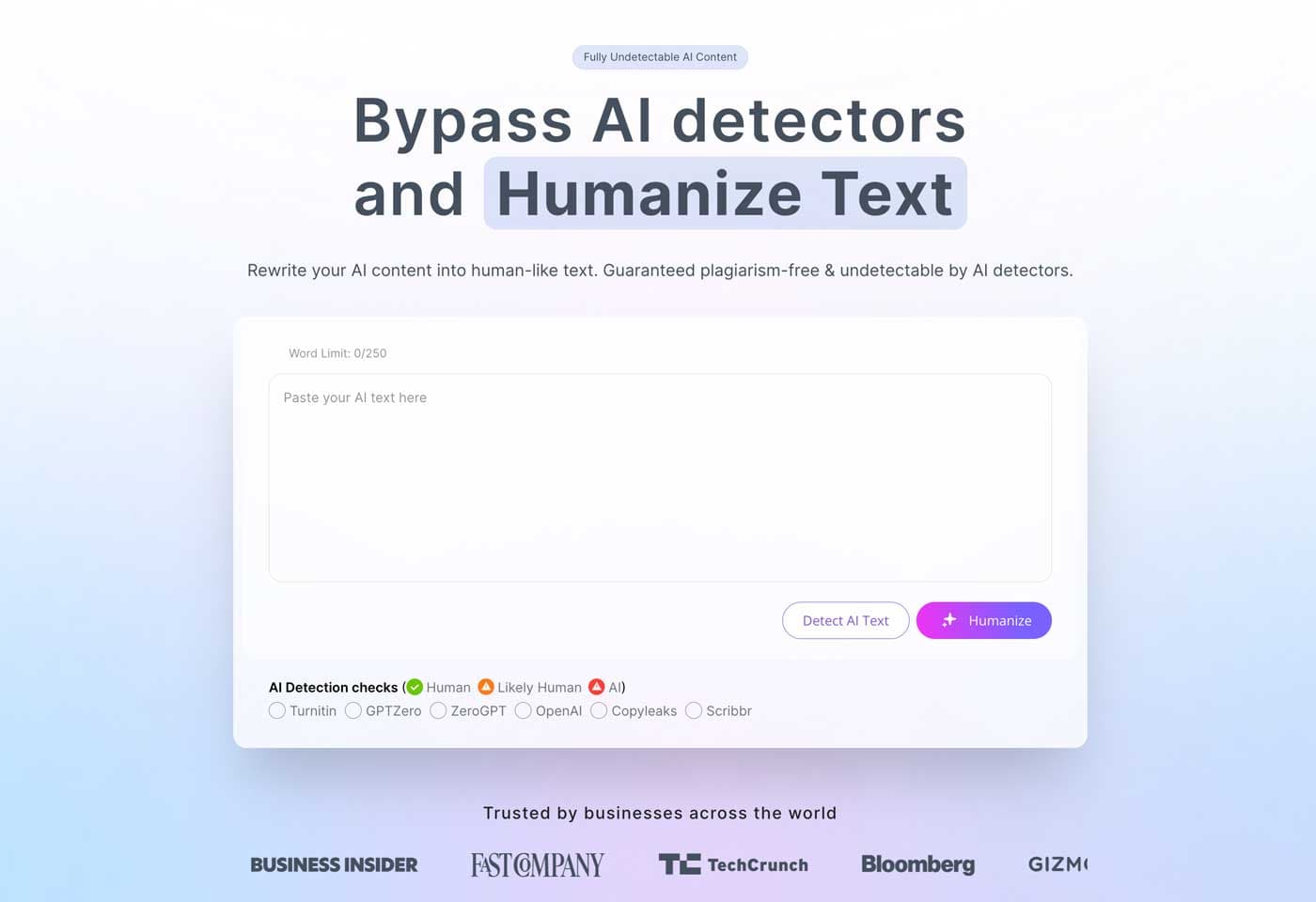
Start
Humanizing
for Free!
Humanize