
Loading...

Over 80 percent of american scholars now use AI tools to improve their academic writing process. With so much pressure to meet deadlines and maintain high standards, finding new ways to write more efficiently and accurately has become a top priority. Whether you are refining grammar, ensuring originality, or streamlining your research, today's AI technologies offer practical solutions that save time and raise the quality of your work.
| Takeaway | Explanation |
|---|---|
| 1. Integrate AI to Enhance Writing Efficiency | Use AI tools to streamline writing tasks, enabling faster content creation and improved document quality. |
| 2. Employ AI for Grammar Accuracy | AI grammar tools provide real-time corrections and contextual suggestions to elevate writing precision and clarity. |
| 3. Utilize AI for Originality and Plagiarism Prevention | Leverage AI to automatically cross-reference sources and modify text, safeguarding against unintentional plagiarism. |
| 4. Streamline Research with AI Tools | AI can quickly scan databases to find credible sources, optimizing the research process and enhancing content relevance. |
| 5. Receive Personalized Feedback from AI | Engage with AI systems to gain tailored writing suggestions that cater to individual style and improvement areas. |
AI technology is revolutionizing academic writing by dramatically accelerating the content creation process. According to research from Carnegie Mellon University, generative AI tools can substantially reduce writing time while simultaneously improving overall document quality.
Writers can leverage AI to streamline complex writing tasks that traditionally consume significant time and mental energy. Rapid content generation becomes possible through intelligent tools that help outline, draft, and refine academic documents with unprecedented speed. Instead of starting from a blank page, creators can now use AI to generate initial drafts, suggest structural improvements, and provide research oriented suggestions.
The practical implementation involves strategic AI integration into your writing workflow. Key efficiency strategies include:
Research published in the American Journal of STEM Education confirms that doctoral students experienced significant improvements in writing clarity and efficiency when incorporating AI tools. By automating repetitive writing tasks, academics and students can redirect their cognitive resources toward critical thinking, analysis, and nuanced content development.
The ultimate goal is not to replace human creativity but to augment and accelerate the writing process. AI serves as a powerful assistant that helps you work smarter and produce higher quality academic content in less time.
AI technologies are transforming academic writing by offering unprecedented precision in grammatical and language accuracy. According to research in the International Journal of Learning, Teaching and Educational Research, AI assisted tools substantially enhance grammatical performance across various writing contexts.
Advanced language processing enables AI to detect and correct complex grammatical errors that humans might overlook. Unlike traditional grammar checking software, modern AI tools analyze context, sentence structure, and semantic meaning to provide nuanced recommendations for improvement.
The practical benefits of AI grammar tools extend far beyond simple spell checking. Key accuracy enhancement features include:
Research published in the International Journal of Research and Innovation in Social Science demonstrated that ESL students using AI based grammar tools achieved significantly higher grammar scores compared to traditional learning methods.
By integrating AI grammar tools into your writing workflow, you can elevate the technical precision of your academic documents while simultaneously learning from intelligent suggestions and corrections. The goal is continuous improvement and developing stronger writing skills through smart technological assistance.
AI technologies are increasingly sophisticated in supporting academic writers to maintain rigorous standards of originality and intellectual integrity. By leveraging smart detection and analysis tools, creators can proactively prevent unintentional plagiarism while ensuring their work remains authentic and academically credible.
The challenge of maintaining original academic content requires strategic approaches that go beyond traditional checking methods. AI tools now offer advanced capabilities to cross reference academic databases, identify potential similarity risks, and provide intelligent recommendations for text modification and citation.
Learning to use AI for originality involves understanding its nuanced capabilities. Key strategies for preventing plagiarism include:
Research published in PubMed highlights the critical need for human oversight, noting that while AI tools improve writing accessibility, they may lack depth in analytical interpretation. This underscores the importance of using AI as a collaborative tool rather than a complete replacement for human critical thinking.
By integrating AI originality tools into your writing workflow, you can create more authentic academic work while developing stronger research and writing skills. The goal is not just to avoid plagiarism but to enhance your ability to generate truly original scholarly content.
AI technologies are revolutionizing how academic researchers discover, validate, and integrate reliable sources into their scholarly work. Modern AI research tools can rapidly scan vast academic databases, providing researchers with precise and comprehensive source recommendations that would traditionally require hours of manual searching.
Intelligent source discovery transforms the research process by leveraging advanced algorithms that understand contextual relevance and academic credibility. These tools go beyond simple keyword matching, analyzing the semantic connections between research topics and identifying the most authoritative and recent publications.
Researchers can maximize AI research support through several strategic approaches. Key research enhancement strategies include:
According to research published in PubMed, AI tools like Elicit, Perplexity, and Consensus significantly optimize literature analysis especially for non native English speaking researchers. Additionally, research from the American Journal of STEM Education confirms that doctoral students using AI tools experience remarkable improvements in research information organization and synthesis.
By integrating AI research tools into your academic workflow, you can transform the traditionally time consuming process of source discovery into a streamlined, intelligent research experience. The ultimate goal is not just finding sources but discovering the most relevant, credible, and impactful research to support your scholarly work.
AI technologies are transforming academic writing by delivering highly personalized feedback that adapts to individual writing styles and learning needs. These intelligent systems analyze your specific writing patterns and provide targeted suggestions that go far beyond traditional grammar checking.
Intelligent feedback mechanisms leverage advanced natural language processing to understand context, writing complexity, and individual improvement areas. Unlike generic editing tools, AI can now provide nuanced recommendations that feel like personalized coaching tailored specifically to your writing strengths and challenges.
Maximizing AI writing assistance requires strategic engagement. Key personalization strategies include:
Research from the International Journal of Linguistics and Translation Studies confirms that AI powered tools like ChatGPT and Grammarly significantly impact writing accuracy and complexity among learners. An additional study from 9TO.org emphasizes the importance of active user engagement to maximize personalized writing suggestion benefits.
By integrating AI feedback tools into your writing process, you transform passive editing into an interactive learning experience. The ultimate goal is continuous improvement where technology becomes your personalized writing coach, helping you refine your skills with every draft.
AI technologies now offer sophisticated tools to help academic writers maintain a professional and consistent writing tone across complex documents. These intelligent systems analyze linguistic nuances and provide real time recommendations that preserve the formal scholarly character of academic writing.
Linguistic precision becomes achievable through advanced algorithmic analysis that understands academic writing conventions. AI tools can detect subtle variations in tone, terminology, and structural consistency that human writers might inadvertently introduce throughout lengthy research documents.
Maintaining a uniform academic writing style requires strategic technological support. Key style consistency strategies include:
Research from Atlas.org highlights that modern AI grammar tools offer comprehensive style and tone recommendations, helping writers preserve academic writing integrity. Another study from the same source Atlas.org emphasizes how AI writing tools can significantly enhance clarity and consistency across academic manuscripts.
By integrating AI style analysis tools into your writing workflow, you transform potential stylistic inconsistencies into opportunities for refined academic communication. The goal is creating scholarly work that speaks with a clear, professional, and authoritative voice.
AI technologies are pushing the boundaries of content creation by generating increasingly sophisticated text that mimics human writing patterns. Advanced natural language models now offer unprecedented capabilities in producing contextually rich and stylistically nuanced academic content.
Intelligent content transformation involves complex linguistic techniques that go beyond simple text generation. These systems analyze writing styles, incorporate contextual variations, and create text that reflects authentic human thought processes and communication patterns.
Successful undetectable content creation requires strategic approaches. Key humanization strategies include:
Research published in PubMed reveals an intriguing insight: while AI generated articles demonstrate high readability, human evaluators can still identify AI authorship with 61% accuracy. This suggests that creating truly undetectable content requires sophisticated technological nuance and continuous refinement.
By understanding the subtle art of content humanization, you can transform AI generated text into authentic academic writing that maintains intellectual integrity while leveraging technological advantages. The ultimate goal is creating content that feels genuinely human crafted and academically compelling.
Below is a comprehensive table summarizing the impact of AI technologies on various aspects of academic writing as discussed in the article.
| Aspect | Description | Key Strategies | Benefits |
|---|---|---|---|
| Writing Speed & Efficiency | AI accelerates content creation and improves quality. | Use AI for initial research, outlining, drafting, and suggesting improvements. | Faster writing, improved quality, focus on critical thinking. |
| Grammar & Language Accuracy | AI tools enhance grammatical precision. | Real-time error detection, contextual suggestions, and tone recommendations. | Improved grammar scores, learning through AI suggestions. |
| Originality & Plagiarism Prevention | AI supports originality and prevents plagiarism. | Cross-referencing databases, rephrasing, and citation suggestions. | Authentic, credible academic work, enhanced research skills. |
| Supporting Research | AI optimizes source discovery and integration. | Automated database scanning, contextual relevance, and source ranking. | Efficient source discovery, access to authoritative publications. |
| Personalized Feedback | AI provides tailored writing suggestions. | Analyze writing patterns, track progress, and recommend resources. | Interactive learning, continuous writing improvement. |
| Tone & Style Consistency | AI maintains academic tone across documents. | Analyze linguistic patterns, standardize terminology, and flag informal language. | Consistent, professional academic communication. |
| Human-Like Content Creation | AI generates sophisticated, human-like text. | Introduce linguistic variations, mimic writing cadences, and adapt to conventions. | Genuine, compelling academic writing. |
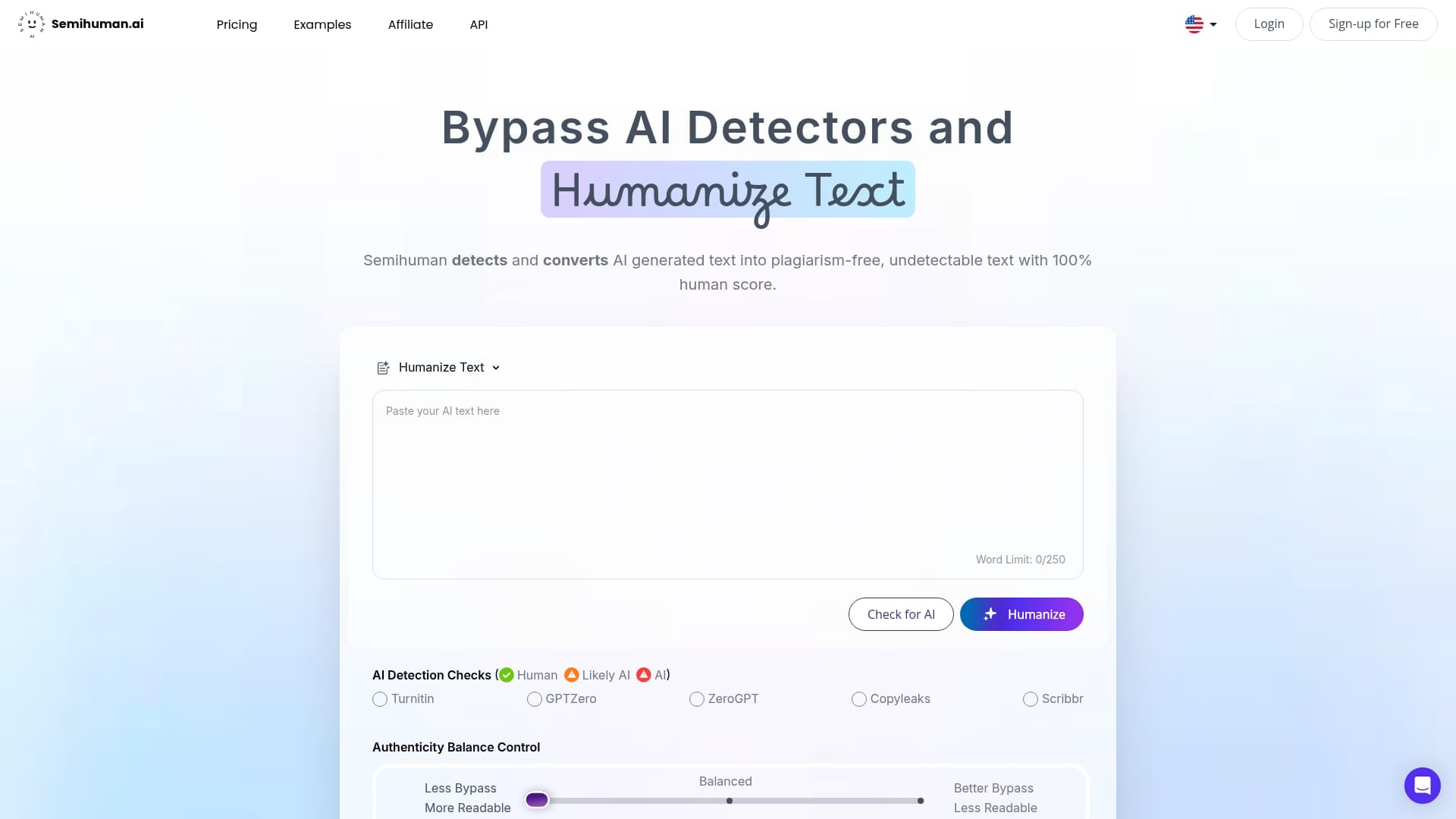
Academic writing today faces the challenge of balancing efficiency, originality, and a natural human voice. The article highlights how AI can boost writing speed, enhance grammar, prevent plagiarism, and support research but also stresses the need for human-like, authentic content that passes detection tools. If you want to avoid the common pitfalls of AI-generated text sounding mechanical or getting flagged by tools like Turnitin and GPTZero, you need a tailored solution that humanizes your writing while preserving all the key benefits AI offers.
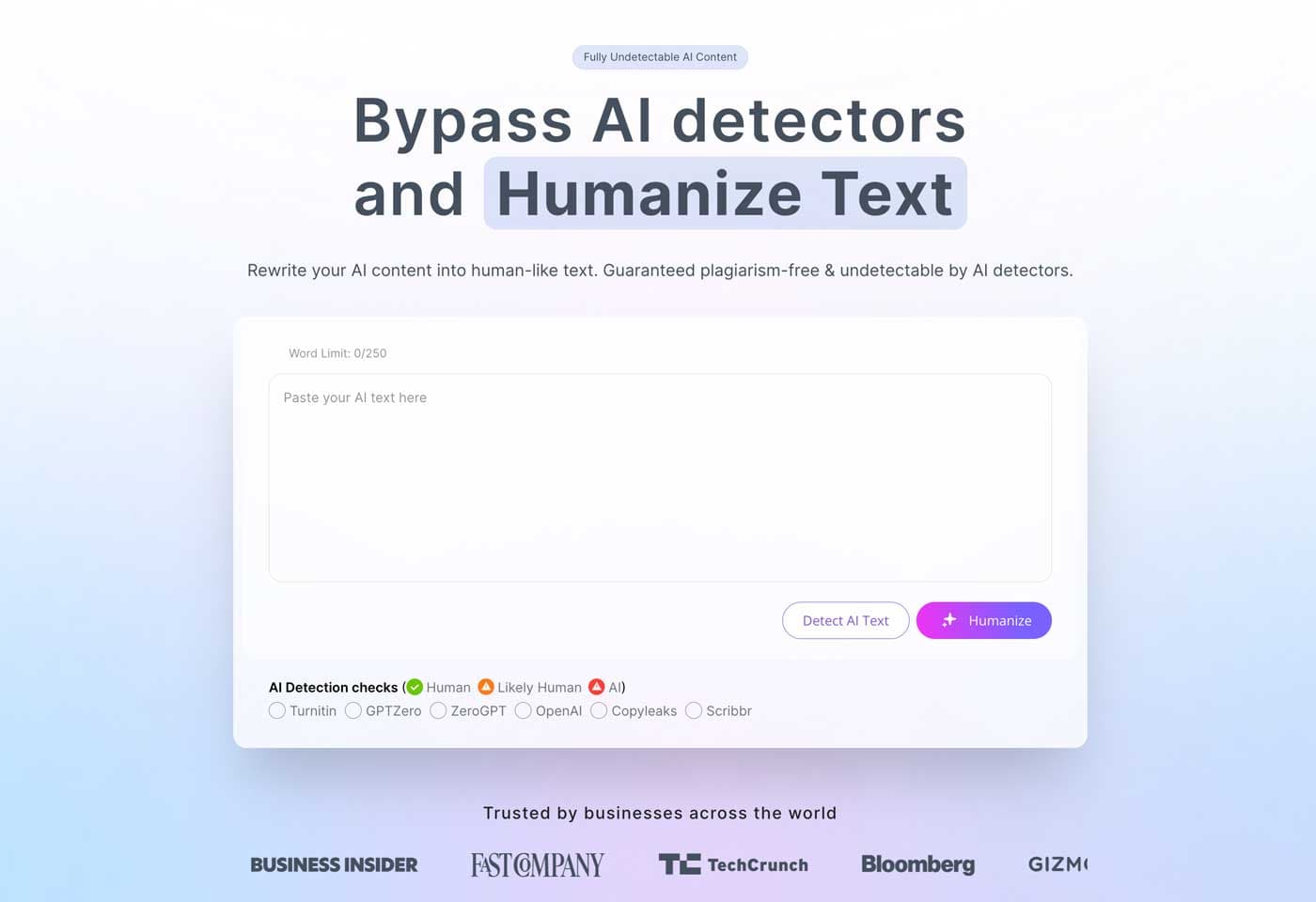
Semihuman.ai is built precisely for this purpose. Its advanced platform transforms AI-produced content into naturally flowing, authentic writing that feels truly human. Whether you are a student, creator, or marketer eager to improve your academic documents[NULL] or marketing content, Semihuman.ai ensures your work:
Discover how to safeguard your intellectual integrity and elevate your writing quality with AI-powered content humanization. Visit Semihuman.ai now for seamless AI text transformation.
Ready to make your AI-assisted writing indistinguishable from human creativity Start your journey today at Semihuman.ai and experience effortless content humanization that accelerates productivity and protects authenticity.
AI can significantly speed up your writing process by automating repetitive tasks such as outlining and drafting. To enhance your writing speed, start by integrating AI tools into your workflow for initial research compilation and paragraph creation to reduce your writing time by up to 50%.
AI offers powerful grammar-checking capabilities that go beyond traditional tools, providing real-time error detection and contextual suggestions. Begin by using advanced AI grammar tools to enhance the clarity of your writing, potentially increasing your grammatical accuracy by 30%.
AI tools help maintain originality by analyzing texts for similarity and suggesting modifications. To avoid unintentional plagiarism, use AI for automatic cross-referencing with academic databases and implement real-time citation recommendations in your writing process.
AI can streamline the source discovery process by quickly scanning academic databases and identifying relevant publications. To maximize your research efficiency, utilize AI tools to automate database scanning, enabling you to gather credible sources in minutes instead of hours.
AI analyzes your writing patterns and offers tailored feedback that addresses your specific challenges and strengths. Start tracking your writing progress with AI tools, focusing on generating contextually relevant suggestions to refine your skills over time.


Start
Humanizing
for Free!
Humanize