
Loading...

Most American content marketers now rely on artificial intelligence to draft articles or blog posts, yet studies show that over 60 percent of AI-generated text still struggles to sound authentically human. For SEO specialists and marketers, crafting content that ranks well and avoids plagiarism concerns goes beyond simply running a tool. This guide shows how nuanced optimization, careful review, and practical tools can transform algorithmic drafts into compelling content with genuine American voice and improved search performance.
| Takeaway | Explanation |
|---|---|
| 1. Leverage Human Review | Always run AI-generated content through human editing to enhance its quality and authenticity. This adds unique perspectives that AI cannot replicate. |
| 2. Identify AI Writing Traits | Recognize linguistic patterns and consistency that often indicate AI-generated text, ensuring your content maintains a human feel. |
| 3. Integrate Keywords Naturally | Place keywords effectively within your writing so they feel organic, enhancing SEO without sacrificing readability or engagement. |
| 4. Humanize Tone and Structure | Use varied sentence lengths, personal anecdotes, and emotional language to create a more relatable and engaging narrative. |
| 5. Continuously Refine Content | Treat content optimization as an ongoing process, regularly reviewing and improving for coherence, accuracy, and added personal insights. |
AI content optimization represents a sophisticated approach to transforming computer generated text into authentic human-like content. At its core, this process leverages computational creativity techniques to enhance writing quality and originality.
Understanding how artificial intelligence generates content requires recognizing its fundamental mechanics. Computational creativity involves using computer systems to emulate human innovative processes. These systems analyze massive datasets to generate text that mimics natural writing patterns.
The key challenge is moving beyond basic text generation to create content that feels genuinely human. AI tools now use advanced machine learning algorithms to predict language structures, understand context, and produce more natural sounding text. This means analyzing writing style, sentence complexity, and semantic coherence to craft content that sounds less robotic and more authentic.
Effective AI content optimization requires strategic human intervention. While AI can generate initial drafts rapidly, human editors must refine and personalize the output. This involves checking for logical flow, removing repetitive language, and injecting unique perspectives that automated systems cannot replicate.
Pro Tip: Always run AI generated content through a human review process, focusing on adding personal insights and verifying factual accuracy to transform algorithmic text into genuinely compelling writing.
Implementing AI content optimization is not about replacing human creativity but augmenting it. By understanding these foundational principles, content creators can leverage AI as a powerful writing assistant that accelerates productivity while maintaining authentic communication.
AI-generated text often carries subtle yet distinctive markers that reveal its artificial origin. Recognizing these characteristics helps writers and content creators maintain authenticity and avoid potential detection risks.
Linguistic patterns represent the most significant giveaway. Sentence-level analysis techniques reveal that AI-generated content frequently demonstrates unnatural consistency in sentence structure and vocabulary usage. Unlike human writers who naturally vary their linguistic rhythm, AI tends to produce text with remarkable uniformity.
Keyword indicators include overly polished language with minimal grammatical errors, generic phrasing, and a lack of genuine personal perspective. AI systems typically generate content that sounds technically correct but emotionally flat. The text might display perfect grammar yet feel sterile and impersonal.
Readers can spot AI text through several telltale signs: repetitive sentence beginnings, formulaic paragraph transitions, and an absence of unique voice or nuanced understanding. Machine-generated content often struggles with contextual subtleties that human writers inherently understand.
Practically speaking, writers should read their content critically. Look for sections that sound too perfect, lack genuine human emotion, or seem disconnected from real-world experience. Identifying AI-generated text patterns requires developing a keen eye for linguistic nuance and mechanical writing characteristics.
Pro Tip: Read your content out loud as if performing for an audience. If the text sounds robotic, lacks natural conversational flow, or feels disconnected from genuine human experience, it likely originated from an AI system.
Keyword integration represents an art form where strategic language meets search engine optimization. Effective keyword placement requires more than mechanical stuffing it requires creating genuine content that reads naturally while signaling relevance to search algorithms.
Searching for an authentic content strategy means understanding how computational creativity can transform keyword usage from robotic to nuanced. Modern search engines reward content that sounds conversational and provides real value to readers rather than simply repeating targeted phrases.
The key is thinking contextually. Instead of forcing keywords into sentences, writers should develop content where keywords emerge organically. This means understanding your topic deeply and writing about it in a way that naturally includes relevant search terms without compromising readability.
Successful keyword integration follows several strategic principles. First, focus on semantic variations of your primary keyword. Use synonyms, related concepts, and natural language alternatives that expand your content's linguistic range. This approach signals topical expertise to search engines while maintaining reader engagement.
Practical techniques include embedding keywords in headings, using them in the first and last paragraphs, and ensuring they appear in a way that sounds conversational. Avoid awkward repetitions that interrupt natural reading flow. Your goal is creating content so compelling that keywords feel like a natural part of the narrative.
Pro Tip: Read your content out loud after adding keywords. If any phrase sounds forced or unnatural, rewrite it to sound more conversational and authentic.
Humanizing AI-generated content requires more than simple word replacement. It demands a strategic approach to crafting language that sounds genuinely personal and emotionally intelligent.
Adversarial paraphrasing techniques reveal that truly human writing goes beyond grammatical correctness. It involves injecting personality, varying sentence rhythm, and creating emotional resonance that algorithmic systems struggle to replicate.
Sentence structure plays a critical role in making text feel authentic. Human writers naturally mix sentence lengths create unexpected rhythms and use conversational transitions. Short sentences. Longer explanatory passages. Sudden bursts of energy. These variations signal human creativity in a way rigid AI systems cannot easily mimic.
Practical humanization involves three key strategies. First, introduce intentional imperfections subtle grammatical variations that break algorithmic predictability. Second, incorporate personal anecdotes or references that demonstrate genuine experience. Third, use emotional language that reflects real human perspective rather than clinical description.
Contextual writing matters immensely. Text transformation research demonstrates that authentic content requires understanding beyond surface level language manipulation. Writers must think about the emotional journey their readers will experience while consuming the text.
Pro Tip: Read your content out loud as if telling a story to a friend. If it sounds like something you would actually say in conversation, you are on the right track to creating truly human sounding text.
AI content detection represents an ongoing challenge for modern writers seeking to leverage artificial intelligence while maintaining authenticity. Specialized tools like Semihuman.ai provide strategic solutions for transforming potentially detectable AI generated text into nuanced human like content.
Comprehensive AI content review techniques demonstrate that effective detection evasion requires more than simple word replacement. The platform uses advanced algorithms to restructure text linguistically while preserving original meaning.
The core functionality of Semihuman.ai involves analyzing AI generated content and introducing strategic variations. These variations include adjusting sentence structure, modifying vocabulary complexity, and injecting contextual nuances that signal human authorship. Writers can effectively bypass automated detection systems by strategically randomizing textual characteristics.
Practical implementation means running your content through the platform multiple times and comparing outputs. Each pass introduces subtle linguistic shifts that make the text appear more organically written. The goal is creating content that feels genuinely human crafted rather than algorithmically produced.
Key features include text restructuring, keyword integration, and semantic variation generation. These tools help writers transform potentially mechanical writing into compelling narratives that sound authentically human.
Pro Tip: Always review the transformed content personally. While AI tools provide excellent assistance, your final human touch ensures the text maintains its core message and intended communication style.
Plagiarism detection has become increasingly complex in the age of artificial intelligence. Writers must now navigate sophisticated tools that can identify unoriginal content across digital landscapes.
Reinforcement learning techniques have transformed how we understand text originality. These advanced algorithms can now detect subtle similarities and potential content duplications that traditional plagiarism checkers might miss.
Unique content creation requires more than simply avoiding direct copying. Writers need to develop strategies that ensure their work remains original while leveraging AI assistance. This means understanding the difference between inspiration and direct reproduction.
Effective plagiarism prevention involves multiple layers of verification. First, use multiple detection tools to cross reference your content. Second, always run AI generated text through comprehensive originality checks. Adversarial paraphrasing methods demonstrate that sophisticated rewriting can help transform potentially derivative text into genuinely unique material.
Practical steps include using academic plagiarism detection platforms, comparing your text against online databases, and manually reviewing sections that seem too similar to existing content. Automated tools provide a strong starting point but cannot replace human critical analysis.
Pro Tip: Develop a personal writing style that goes beyond algorithmic generation. Inject personal experiences, unique perspectives, and contextual insights that make your content distinctly yours.
Content optimization is an ongoing journey that demands persistent attention and strategic refinement. Successful writers understand that initial AI generated content represents just the beginning of a comprehensive writing process.
Self adaptation techniques demonstrate how advanced systems can continuously improve their outputs through iterative learning. Writers should approach their content with a similar mindset of constant evolution and enhancement.
Reviewing AI generated text requires a multifaceted approach. Sentence level linguistic analysis reveals that nuanced improvements often emerge through careful examination of structural and semantic elements. This means breaking down your content into smaller components and assessing each section critically.
Effective content review involves multiple strategic steps. First, check for logical flow and coherence. Second, verify factual accuracy and remove any potentially generic or repetitive language. Third, inject personal insights and contextual nuances that transform algorithmic text into compelling narrative.
Technological tools can assist in this process but cannot replace human critical thinking. Use grammar checkers, plagiarism detection platforms, and AI optimization tools as supportive resources. However, always rely on your personal judgment to ensure the final content truly reflects your intended message and voice.
Pro Tip: Schedule dedicated review sessions for your content. Set aside specific time intervals to revisit and refine your writing, treating each draft as a living document that can always be improved.
Below is a comprehensive table summarizing the main topics and strategies discussed throughout the article.
| Topic | Description | Key Considerations |
|---|---|---|
| AI Content Optimization | Involves transforming AI-generated text into human-like content using computational creativity. | Requires human intervention to refine and personalize text. |
| Signs of AI-Generated Text | Often shows unnatural linguistic patterns and lacks personal perspective. | Look for uniform structure and lack of emotional depth. |
| Keyword Integration | Placing keywords naturally for enhanced search engine relevance. | Use synonyms and semantic variations to maintain readability. |
| Humanizing Tone and Structure | Aimed at creating personal and emotionally intelligent content. | Incorporate personal anecdotes and emotional language. |
| AI Detection Evasion | Using tools like Semihuman.ai to avoid detection of AI-generated content. | Restructure text to appear authentically human. |
| Plagiarism and Unique Content | Ensuring originality in content using advanced detection tools. | Differentiate between inspiration and replication; use layered verification. |
| Continuous Content Review | Ongoing process to enhance and optimize content. | Regularly assess text for coherence and inject personal insights. |
The article "7 Must-Know AI Content Optimization Tips for Authenticity" highlights vital challenges such as detecting AI-generated text, avoiding robotic language, and humanizing your writing to resonate emotionally with readers. Achieving the delicate balance between leveraging AI efficiency and maintaining genuine human tone can feel overwhelming especially when trying to integrate keywords naturally or evade AI content detectors like Turnitin and GPTZero. This is where Semihuman.ai steps in as your essential ally.
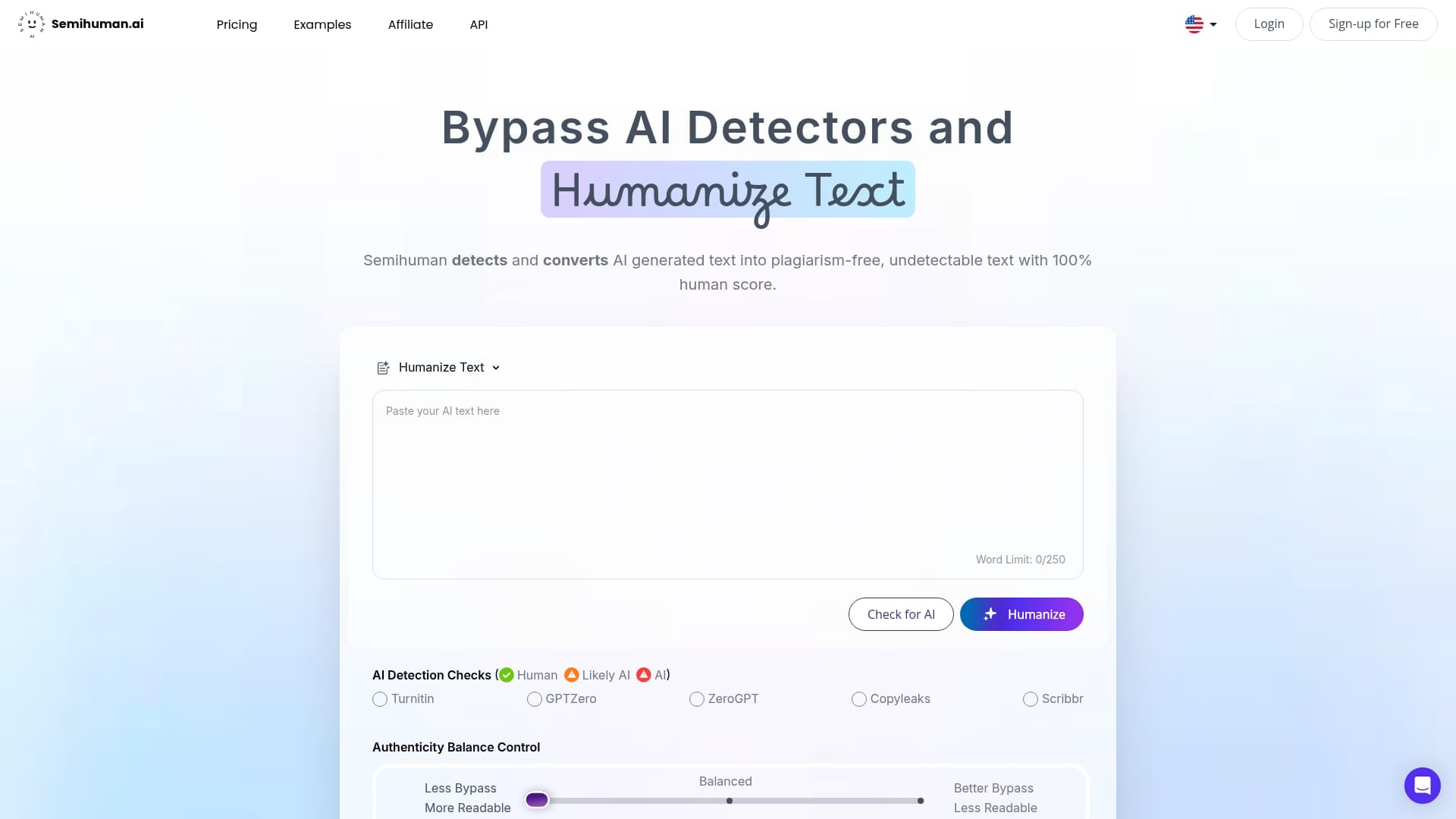
Semihuman.ai is expertly designed to address these exact pain points by transforming your AI-generated drafts into content that reads as distinctly human. Using advanced text restructuring and keyword integration features, the platform makes your writing flow more naturally while ensuring your message stays authentic and engaging. Whether you are a content creator, marketer, or student concerned about plagiarism and originality, Semihuman.ai equips you to improve SEO rankings and bypass detection systems effortlessly. Take control of your content today by exploring how to humanize your writing with Semihuman.ai tools and embrace smarter, more authentic communication now.
AI content optimization focuses on enhancing AI-generated text to sound more human-like. To achieve this, prioritize refining language for emotional resonance and ensuring logical flow by incorporating personal perspectives.
To identify AI-generated text, look for unnatural consistency in sentence structure and repetitiveness. Read your content out loud; if it sounds robotic or too perfect, revise it to inject more human emotion and natural flow.
Integrate keywords by ensuring they fit contextually within your content, avoiding forced phrases. Aim to include synonyms and related terms within the text, making keywords feel like a natural part of the narrative instead of repetitive inserts.
Humanize the tone by varying sentence lengths and including personal anecdotes that resonate emotionally. Focus on creating an engaging narrative that feels personal rather than robotic, making readers more connected to your writing.
Utilize specialized tools designed to analyze and restructure AI-generated text for increased authenticity. Experiment with these tools multiple times to introduce various linguistic variations, making your content appear more naturally written.
Ensure your content is plagiarism-free by using multiple plagiarism detection tools and conducting manual reviews of sections you suspect may be too similar to existing content. This two-pronged approach allows you to maintain originality while using AI assistance.



Start
Humanizing
for Free!
Humanize